Adobe Stock/william87

A Crisis of Confidence in America
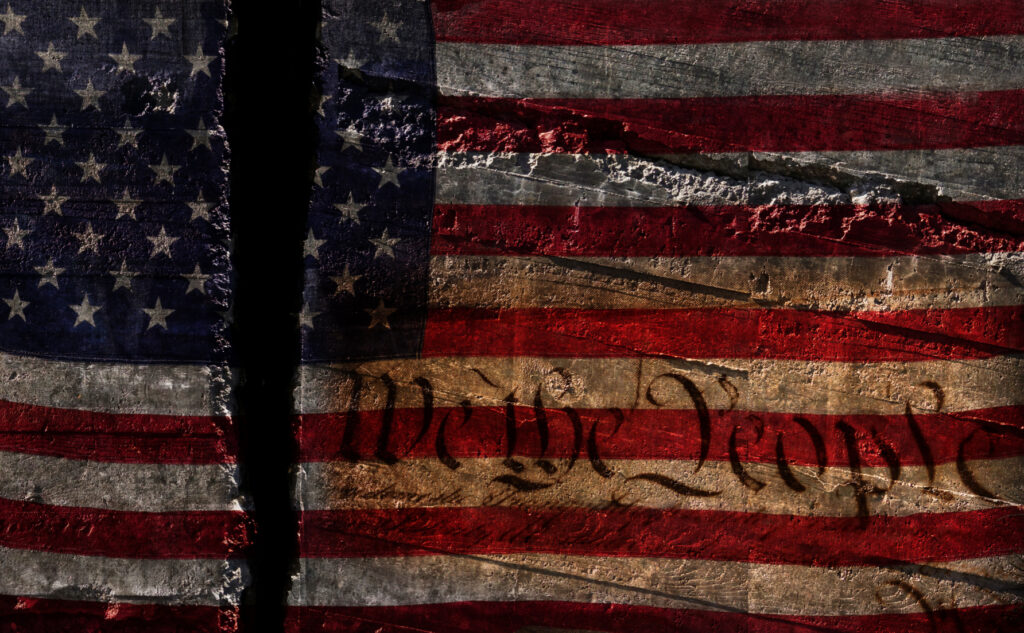
My biggest complaint about progressives, especially American progressives, is their constant, unrelenting distrust of our country, its people and institutions, as well as our history, culture, and traditions. We are supposed to understand that the price to pay for being far less than perfect is to accept that it is our shortcomings that mostly define us from the founding of the nation to this very day. Their road map for the future is one where socialism is the American reality.
A Case for Balance and Perspective
Count me among those who feel this very negative view is neither justified nor healthy for the world’s oldest modern constitutional democracy (1789). How about a more balanced outlook, one that pays some deference to the values recognized as American for quite some time? As far back as the first half of the 19th Century, French author Alexis de Tocqueville, in his two-volume Democracy in America, highlighted how individual liberty, freedom, opportunity, and responsibility, coupled with a shared sense of community, were a combination resulting in remarkable and wonderful outcomes. We were a nation where mutual trust was a way of life.
Freedom Requires Vigilance
Ronald Reagan warned many years ago that none of the benefits of a free society were automatic. “Freedom is never more than one generation away from extinction. We didn’t pass it to our children in the bloodstream. It must be fought for, protected, and handed on for them to do the same.” This attitude is a far cry from how our progressive, benevolent betters see the world. Only a country where the wise (themselves) prevail on matters great and small is suitable for the rest of us.
When Standards Begin to Slip
Apparently, outright stealing is no longer any sort of big thing. Respect for private property is so out of fashion. On a recent New York Times podcast, “The Rich Don’t Play by the Rules, so Why Should I?” listeners were treated to the very wealthy Jia Tolentino bragging about lifting products from Whole Foods. After all, Jeff Bezos’ Amazon owns them. Not to be outdone, the self-described socialist, Hasan Piker, waxed less than eloquently about the evils of capitalism. Of course, the gentleman has an estimated wealth of between $10 and $15 million dollars.
The Real-World Consequences
This sort of tortured logic has a price to it. In Chicago, Walgreens announced the closure of multiple stores due to the vast amount of crime and shoplifting. What’s the proper reaction? Well, if you are Alderman William Hall, the answer is to crack down hard. On who? Walgreen’s! You see, Mr. Hall has invented the new crime of “first-degree corporate abandonment.” Apparently, the company is to suffer in silence and be damn glad to do it. It is okay to loot, but not to want to turn a profit.
A Shift in Public Attitudes
None of this is happening in some social laboratory. It is unfolding before us every day. Last year, it was reported that 66 percent of Democrats had a favorable view of socialism, while only 42 percent felt the same about capitalism. If anything ever served as a basis to indict our education system for evil incompetence, this would be it. For years, Americans largely believed socialism was a good form of government, except that it had not been tried. In other words, we understood socialism was little more than a set of empty promises. In simple terms, this is no longer the case.
Two Competing Visions of Trust
At the end of the day, this pretty much gets down to who is it that you trust. In a regulated capitalistic system, the premium is placed on individuals holding themselves largely responsible for the outcomes in their lives. Additionally, they trust one another to voluntarily to do the right thing, as well as to address problems and challenges together. In the socialist model, a group of elites decides what is fair and good, allowing themselves all sorts of rights and privileges, while restricting what it is others will be allowed to think and do.
The Question of Faith in Americans
Jamil Smith recently penned a piece for The Guardian, “The Supreme Court Trusts America Not to Be Racist. I don’t.” His well-written piece remembers when his great-grandfather left the House of Representatives as the last African American to serve during Reconstruction. Much of what he has to say stings because it is true. Systemic racism was and is real. That does not require concluding the answer is to distrust informed Americans to do the right thing. After all, just what is the basis to believe another solution would be better? It is ironic the very people who believe we should eliminate the Electoral College now argue Americans are incapable of fairly drawing lines for legislative districts.
The Choice Before Us
All of this can be reduced to deciding the choice in front of us. Do we largely trust one another as individuals, or do we need the national government to guide our every movement and thought? My friends tease I was there when he said it, but I am a Patrick Henry guy. “Give me liberty, or give me death.”
RECENT

Fall Into Wellness: Creating a Healthier Autumn Routine
Health & Wellness

How to Prepare for Holiday Stress Before It Takes Over
Fitness
🇺🇸 Why the Liberty Bell Doesn’t Actually Ring Anymore
Did You Know?

A Rock Star’s Road to Redemption
Entertainment
New York Community Replaces Defaced Declaration Replica
America
How Four Seconds Can Help Calm the Mind
Friday Fuel

Heather Jenkins and The Power of Intentional Rest
Health & Wellness

Kentucky Bridge Project Gets $24M Boost
American Infra

Arizona Extends Farm Water Fee Relief
In The States

Macaroni, Dive Bars and Sundaes: July 7 Gets Weird
Offbeat Observances
BE THE FIRST TO KNOW
Want to stay in the loop? Be the first to know! Sign up for our newsletter and get the latest stories, updates, and insider news delivered straight to your inbox.

More Content By
Bill Greener
The National Debt Demands Serious People Doing Serious Things
Opinion

Remember This: The Uniform Isn’t Political
Opinion

Bill Greener: Five Questions Worth Asking
Common Sense Corner

Remember This: Happy Fourth, America
America

America Cannot Participation-Trophy Its Way to Another 250 Years
Common Sense Corner
When Did We Become So Fragile?
Opinion
Bill Greener: Flawed AND Blessed
Common Sense Corner

Remember This: Fly the Flag, Celebrate the Country
America

Common Sense: Respect Is a Two-Way Street
Common Sense Corner

Common Sense: Reading, Writing, Arithmetic — and Reality
Common Sense Corner
View All Content By Bill Greener