
Adobe Stock/deagreez
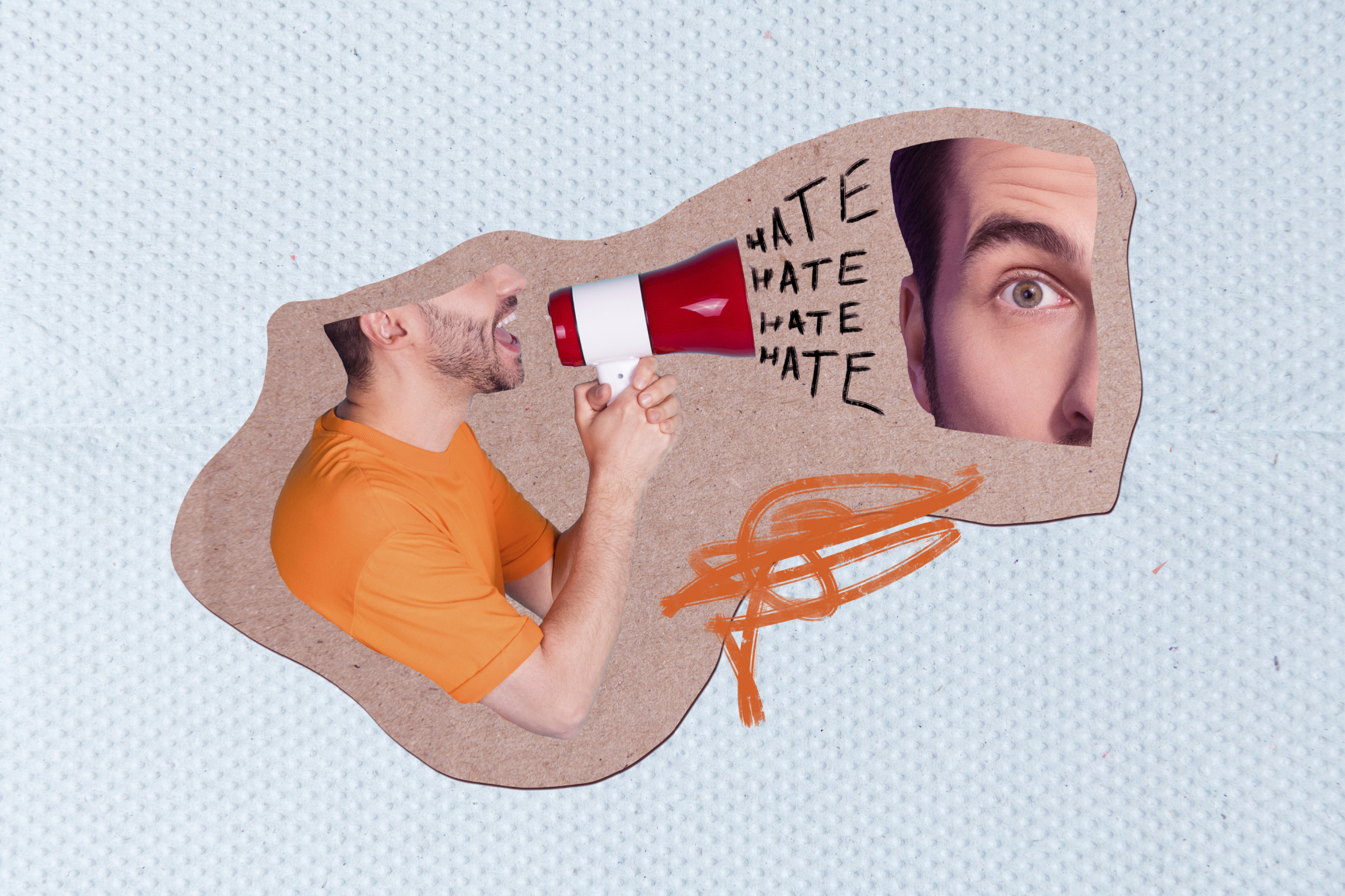
Most of us would never consider ourselves violent people.
We don’t think of ourselves as hateful. We don’t wake up in the morning looking for conflict. We would never imagine ourselves capable of causing serious harm to another person.
Which is why the commandment “You shall not murder” can feel easy to check off and move past.
But Jesus had a way of taking familiar things and revealing the deeper issue underneath.
In the Sermon on the Mount, He expanded on this commandment, pointing not only to our actions, but to our attitudes. He warned about anger, contempt, and the ways we allow resentment to take root in our hearts.
Because violence doesn’t always begin with actions.
Sometimes, it begins with contempt.
A Culture Quick to Cancel
It doesn’t take much to see how easily we have become comfortable tearing each other apart.
Social media rewards outrage. Cable news thrives on conflict. Public shaming has become entertainment. And disagreements that once might have ended with a respectful conversation now often end with relationships broken and people labeled as enemies.
We have become remarkably quick to write people off.
Disagree with me? You must be evil.
See the world differently? You must be ignorant.
Vote differently? You must be beyond redemption.
Somewhere along the way, we stopped seeing people as human beings and started seeing them as categories.
And categories are easier to hate than people.
More Than Winning Arguments
The truth is, disagreement is inevitable.
Healthy societies need debate. Families won’t always see eye to eye. Friends will sometimes disagree. Differences of opinion are part of life.
But disagreement doesn’t require destruction.
Respect isn’t weakness.
Kindness isn’t compromise.
And civility isn’t surrender.
In fact, some of the strongest people are those who know how to stand firmly for what they believe without demeaning those who believe differently.
That takes far more character than simply winning an argument.
People Are More Than Their Worst Moment
Every one of us has said something we regret.
Every one of us has held opinions that changed over time.
Every one of us has needed grace.
Yet we live in a culture that increasingly treats people as though their worst opinion, their worst mistake, or their worst day should define them forever.
That’s not how God sees us.
And perhaps it shouldn’t be how we see each other either.
The Bible reminds us that every person is made in the image of God. That truth doesn’t disappear because someone frustrates us, disappoints us, or sees the world differently.
Human dignity isn’t earned.
It’s inherent.
The Power of Choosing Grace
None of this means avoiding hard conversations or pretending differences don’t matter.
Truth matters.
Convictions matter.
But so does remembering that the person across from us is still a person.
Someone with hopes.
Someone with fears.
Someone loved by family.
Someone created by God.
That perspective changes things.
Because it becomes much harder to despise people when we remember their humanity.
A Challenge for the Week Ahead
This week, before responding in anger, pause.
Before joining the pile-on, pause.
Before assuming the worst, pause.
Ask yourself:
Am I trying to understand—or simply trying to win?
Am I speaking truth—or speaking with contempt?
Am I treating this person as an opponent—or as a fellow human being?
The commandment “You shall not murder” is about far more than avoiding physical harm.
It’s about protecting something sacred.
The dignity of human life.
And in a world increasingly divided by outrage and contempt, perhaps one of the most powerful things we can do is simply remember that we don’t have to agree with everyone to recognize their humanity.
RECENT

Winston Group: GOP Economic Advantage Continues to Slip
Uncategorized

What Your Butterflies Are Trying to Tell You
Did You Know?

World Cup Energy, Summer Festivals And Weekend Fun
Dating

The Endless Loyalty and Love of a Dog
Mans Best Friend

Sunshine, Fresh Air, and Better Health
Friday Fuel

Winston Group Podcast Examines 2024 Election Autopsy
Elections

Feel-Good Summer Foods for Energy and Wellness
Health & Wellness

Pennsylvania Students Honored for “Ought to Be a Law” Proposals
Education

Automation Debate Hits Rail
Technology

Topper Calls for Reform After Skill Games Decision in PA
Gambling
BE THE FIRST TO KNOW
Want to stay in the loop? Be the first to know! Sign up for our newsletter and get the latest stories, updates, and insider news delivered straight to your inbox.

More Content By
Quinn HarperWhen Disagreement Becomes Contempt
Opinion

The People We Take for Granted
Opinion

Freedom Was Never Free—And We Shouldn’t Live Like It Was
America
Maybe We’ve Forgotten How to Rest
Opinion
Faith, Words, and Integrity
Opinion

We Don’t Bow to Idols Anymore—Or Do We?
Opinion
Where Faith Meets Real Life
Opinion

Is Gen Z Finding Faith Again? Not So Fast
Opinion

After Easter: Now What? Living the Resurrection in Everyday Life
Opinion

The Meaning We Forget
Holidays
View All Content By Quinn Harper