
Adobe Stock/ipopba
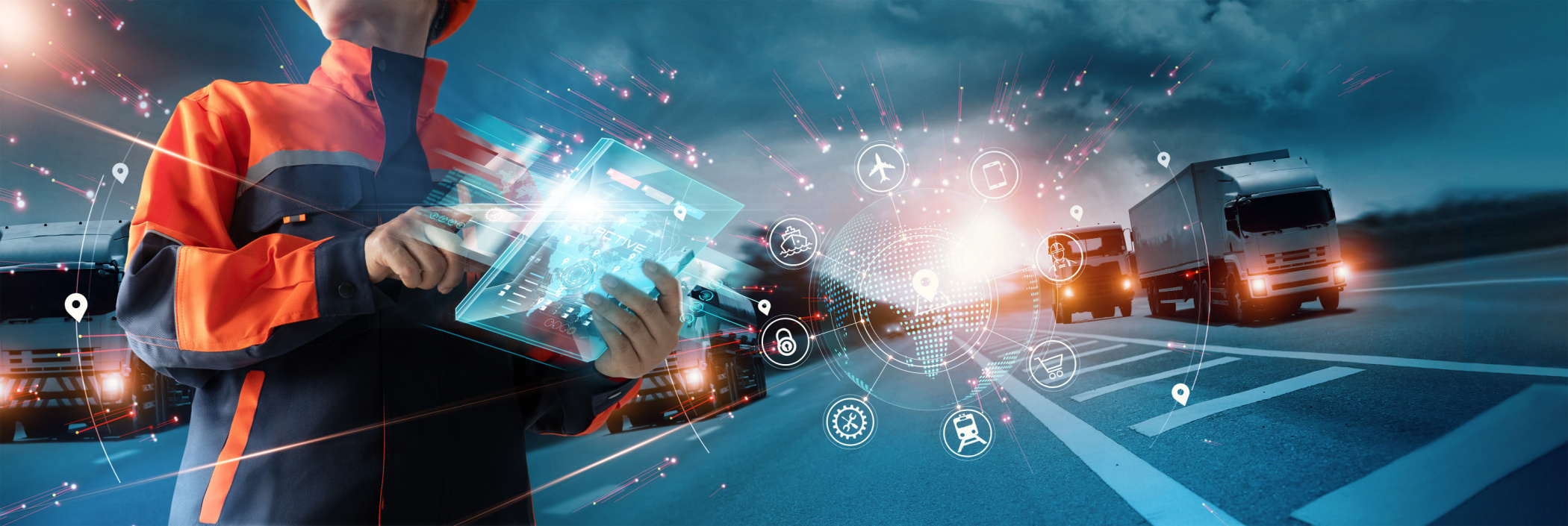
As Congress considers the next steps on surface transportation reauthorization, lawmakers are increasingly confronting how emerging technologies should be incorporated into national transportation policy.
That debate was on display during a Senate Commerce Subcommittee on Surface Transportation, Freight, Pipelines and Safety hearing focused on autonomous vehicles, rail technology, connected vehicle systems and other transportation innovations. The hearing came after House lawmakers advanced a bill containing several rail safety provisions that have drawn debate from industry stakeholders.
Technology and the Transportation Workforce
During the hearing, Teamsters representative Cole Scandaglia acknowledged that technological change has long been part of the transportation sector.
“For our entire history, we’ve evolved alongside new transportation technologies,” Scandaglia told lawmakers.
Rather than arguing broadly against the deployment of autonomous transportation technologies, Scandaglia emphasized the role collective bargaining can play in helping workers navigate change.
“At the core of our mission, we believe that the tool available to the American worker to best navigate the impacts of technological change is a collective bargaining agreement,” he said. “Every day, we use these tools to negotiate the terms of new technological deployments in a manner that ultimately benefits both our members and our employers.”
Scandaglia also said the Teamsters do not oppose innovation outright, pointing to technologies such as automatic emergency braking and electronic logging devices in trucking as examples of tools the union supports when they improve safety and efficiency.
“We do not oppose innovation,” he said.
A Focus on Retraining and Worker Protections
The workforce implications of autonomous vehicles were raised during questioning from Sen. Gary Peters, D-Mich.
Scandaglia responded by focusing on worker transition, retraining and preparation for future changes in transportation jobs.
“For example, a mechanic who works on a diesel engine is not going to be prepared to work inherently on an autonomous vehicle, at least out of the gate,” he said. “And similarly, if there are to be displacements of drivers, what does the future look like for them?”
The exchange reflected a policy approach centered on preparing workers for technological change rather than preventing deployment altogether. That includes discussions around workforce development, retraining and protections for employees whose jobs may be affected by new systems.
Rail Automation Remains More Contested
The hearing also highlighted a contrast with the freight rail industry, where labor groups have opposed several forms of automation and technology deployment.
Rail unions have objected to automated track inspection systems and other technologies that railroads say could improve safety and operating performance. Labor groups have also supported provisions in the Railway Safety Act, including crew-size mandates and other requirements that railroads argue would preserve existing operating practices regardless of future technological advances.
Association of American Railroads President and CEO Ian Jefferies told lawmakers that transportation policy should be tied to measurable safety outcomes.
“I think that leads to a bigger question about locking in current operating requirements without any evidence to prove that those requirements result in a higher safety outcome,” Jefferies said when asked about crew-size mandates and other rail safety proposals.
“If we can’t draw a direct line to a positive safety outcome, we shouldn’t be doing things,” he added.
Jefferies also said concerns about prescriptive mandates extend beyond railroads, noting that agricultural, energy and other freight-dependent sectors have raised concerns about proposals that could increase costs without clear safety benefits.
Congress Weighs Regulation and Innovation
Subcommittee Chairman Todd Young, R-Ind., and Ranking Member Peters both pointed to the potential of emerging technologies to reduce transportation fatalities while also emphasizing the need for regulatory certainty.
Senate Commerce Committee Chairman Ted Cruz, R-Texas, said he hopes legislation will include an autonomous vehicle title and signaled support for a national framework governing autonomous vehicle deployment.
The broader discussion centered on how Congress can encourage innovation while maintaining safety standards and addressing workforce impacts.
A Policy Question Ahead
As lawmakers continue work on transportation legislation, the hearing raised a central question: whether the same framework being discussed for autonomous trucking — worker transition, retraining, workforce development and collective bargaining — should also apply to technology deployment in freight rail.
For transportation policymakers, the issue is likely to remain part of the broader debate over automation, safety and the future of the American freight system.
RECENT

Creating a Cozy Home That Supports Your Well-Being
Health & Wellness

5 Easy Ways to Prepare for the Next Season Before It Takes Over
Health & Wellness

Your 40s Aren’t Just About Hormones — They’re About Your Heart
Uncategorized

Wellness Benefits of Pumpkin Season
Health & Wellness

Fall Into Wellness: Creating a Healthier Autumn Routine
Health & Wellness

How to Prepare for Holiday Stress Before It Takes Over
Fitness
🇺🇸 Why the Liberty Bell Doesn’t Actually Ring Anymore
Did You Know?

A Rock Star’s Road to Redemption
Entertainment
New York Community Replaces Defaced Declaration Replica
America

How Four Seconds Can Help Calm the Mind
Friday Fuel
BE THE FIRST TO KNOW
Want to stay in the loop? Be the first to know! Sign up for our newsletter and get the latest stories, updates, and insider news delivered straight to your inbox.

More Content By
Think American News Staff🇺🇸 Why the Liberty Bell Doesn’t Actually Ring Anymore
Did You Know?
A Rock Star’s Road to Redemption
Entertainment
New York Community Replaces Defaced Declaration Replica
America

Kentucky Bridge Project Gets $24M Boost
American Infra
Arizona Extends Farm Water Fee Relief
In The States

Michigan Storm Recovery Gets Bipartisan Federal Boost
In The States

Canada Says Goodbye To Country Gentleman Tommy Hunter
Entertainment
PA Lawmakers Focus on Energy
Energy

John Adams Saw America’s Future Before Anyone Else
America

The Revolutionary Ideas Behind July 4
Did You Know?
View All Content By Think American News Staff