Marooned in Iowa, Guided by a Song
The 2016 Iowa Caucus was supposed to be another stop on the campaign trail. Late nights, early mornings, borrowed phone chargers, caffeine-fueled interviews — the familiar rhythm of political coverage. Then the snow came. Flights stalled. Schedules fell apart. And suddenly, I found myself marooned in Des Moines, Iowa, with a group of Fox News coworkers, waiting for our next assignment.
What none of us expected was that this unplanned delay would take us to the very place that inspired one of the most iconic songs in American music — the story behind Don McLean’s “American Pie.”
A Road Trip I Didn’t Pack For
Jeff Monosso, Tonya J. Powers, and I were sent out on a several-hour road trip to Clear Lake, Iowa to cover an anniversary tied to the plane crash that killed Ritchie Valens and J.P. “The Big Bopper” Richardson. Somewhere along that long, snowy drive, I had my first Dew Shine — a small, unexpected rite of passage on a trip that was already turning into one of those “only in the field” memories you carry with you long after the assignment ends.
I was wildly unprepared for Iowa winter. My shoes were no match for the snow, and my crew socks weren’t cutting it either. We pulled over at a store that sold work boots, and I bought a pair of Gore-Tex Wolverines on the spot.
The man who sold them to me noticed my thin socks and quietly handed me a complimentary pair of wool socks. I still have them today. That small kindness has stayed with me far longer than the cold ever did.
From Movie Memories to Real History
Growing up, I had always been a big fan of the movie La Bamba about Ritchie Valens, starring Lou Diamond Phillips. Like a lot of people, that film was my first real introduction to the story — a cinematic version of a life cut short. But standing in Clear Lake, tracing the final steps of that story in real time, made the history feel different. He wasn’t just a character in a movie anymore. He was a young man who had stood on that stage the night before his life ended.
Standing Where Legends Last Played
When we arrived at the Surf Ballroom, it didn’t feel like walking into a museum. It felt like stepping into living history. This was the last place Buddy Holly, Ritchie Valens, and J.P. “The Big Bopper” Richardson performed before the plane crash that would become known, through McLean’s lyrics, as “the day the music died.”
We were given a tour by the kindest custodian, who took us through the green room — the same space where generations of musicians have stood before stepping into the spotlight. It was a quiet, almost reverent moment. Rooms like that hold stories in their walls, even when the music isn’t playing.
Walking the Long Way Into the Lyric
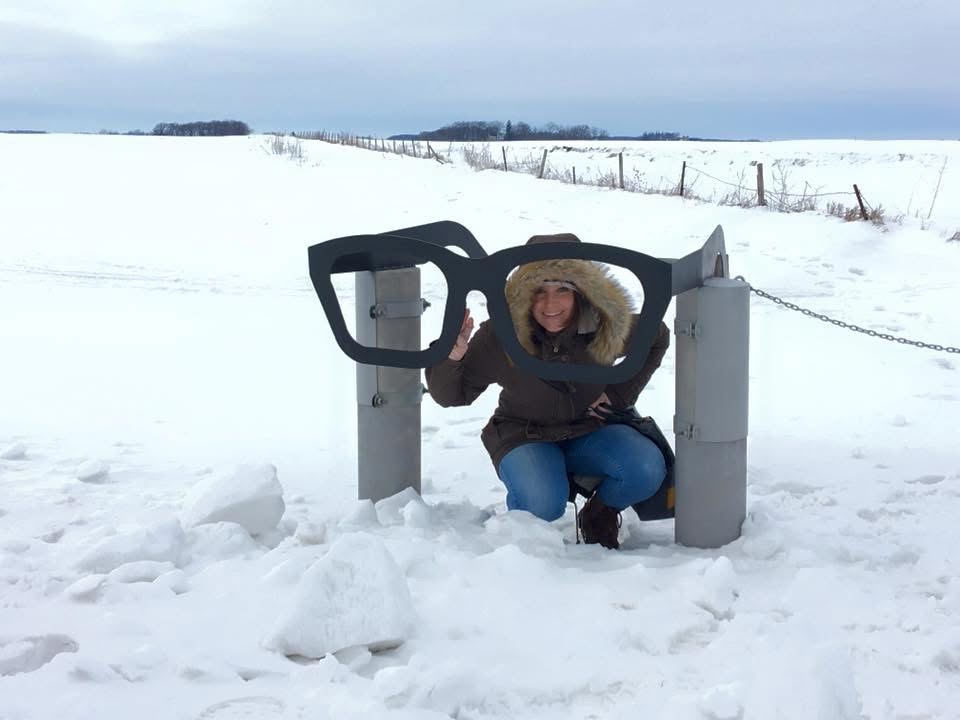
From the ballroom, we made our way toward the crash site. The first marker — the giant pair of black-rimmed glasses — sits along the side of the road. From there, the memorial is about half a mile away. On a map, that doesn’t sound like much. In several feet of snow, slipping and sinking with every step, it felt like miles upon miles.
The wind cut through us. Our boots filled with snow. By the time the silver records and silver guitar came into view, everything was dusted white, the memorial softened and hushed by winter. The physical distance became part of the experience — a long, slow walk that gave space to think about the weight of the story, the youth of the lives lost, and how a single night can echo across generations.
Why the Statue Matters
Now, years later, the Surf Ballroom’s announcement of a life-size bronze statue honoring Don McLean feels deeply personal. His song carried the story of that night far beyond Iowa, far beyond 1959, and into the hearts of people who weren’t alive when the plane went down — people like me, who first met the story through a movie, toasted the road with a Dew Shine, and later trudged through snow to meet the history face to face.
That statue will stand not just for Don McLean, but for the way music preserves memory. For how a song becomes a bridge between generations. And for how sometimes, the most meaningful stories in our lives come from being marooned, unprepared, and unexpectedly guided by history.
RECENT

Creating a Cozy Home That Supports Your Well-Being
Health & Wellness

Creating a Cozy Home That Supports Your Well-Being
Health & Wellness

5 Easy Ways to Prepare for the Next Season Before It Takes Over
Health & Wellness

Your 40s Aren’t Just About Hormones — They’re About Your Heart
Uncategorized

Wellness Benefits of Pumpkin Season
Health & Wellness

Fall Into Wellness: Creating a Healthier Autumn Routine
Health & Wellness

How to Prepare for Holiday Stress Before It Takes Over
Fitness
🇺🇸 Why the Liberty Bell Doesn’t Actually Ring Anymore
Did You Know?
A Rock Star’s Road to Redemption
Entertainment
New York Community Replaces Defaced Declaration Replica
America
BE THE FIRST TO KNOW
Want to stay in the loop? Be the first to know! Sign up for our newsletter and get the latest stories, updates, and insider news delivered straight to your inbox.

More Content By
Jessica Curtis
When Life Steals Your Song
Kindness

Fast Lane, Short Fuse
Living Civics
Honey, I Shrunk the Frogs
Animals

A Small-Town Rescue With Four Paws and a Lesson
Mans Best Friend

When Little Ears Learn Big Words
Living Civics

The Endless Loyalty and Love of a Dog
Mans Best Friend

When the Calendar Changes, Character Counts
Opinion

Appreciating the Little Moments That Make Life Beautiful
Living Civics
Remember This: The Day America’s Original 13 Became One
Opinion
Memorial Day Is Not Just a Long Weekend
America
View All Content By Jessica Curtis