Aug 23
Did You Know?
Saturday Brain Boost: The Pyramids of Giza Didn’t Always Look This Way
Adobe Stock/AlexAnton/stock.adobe.com
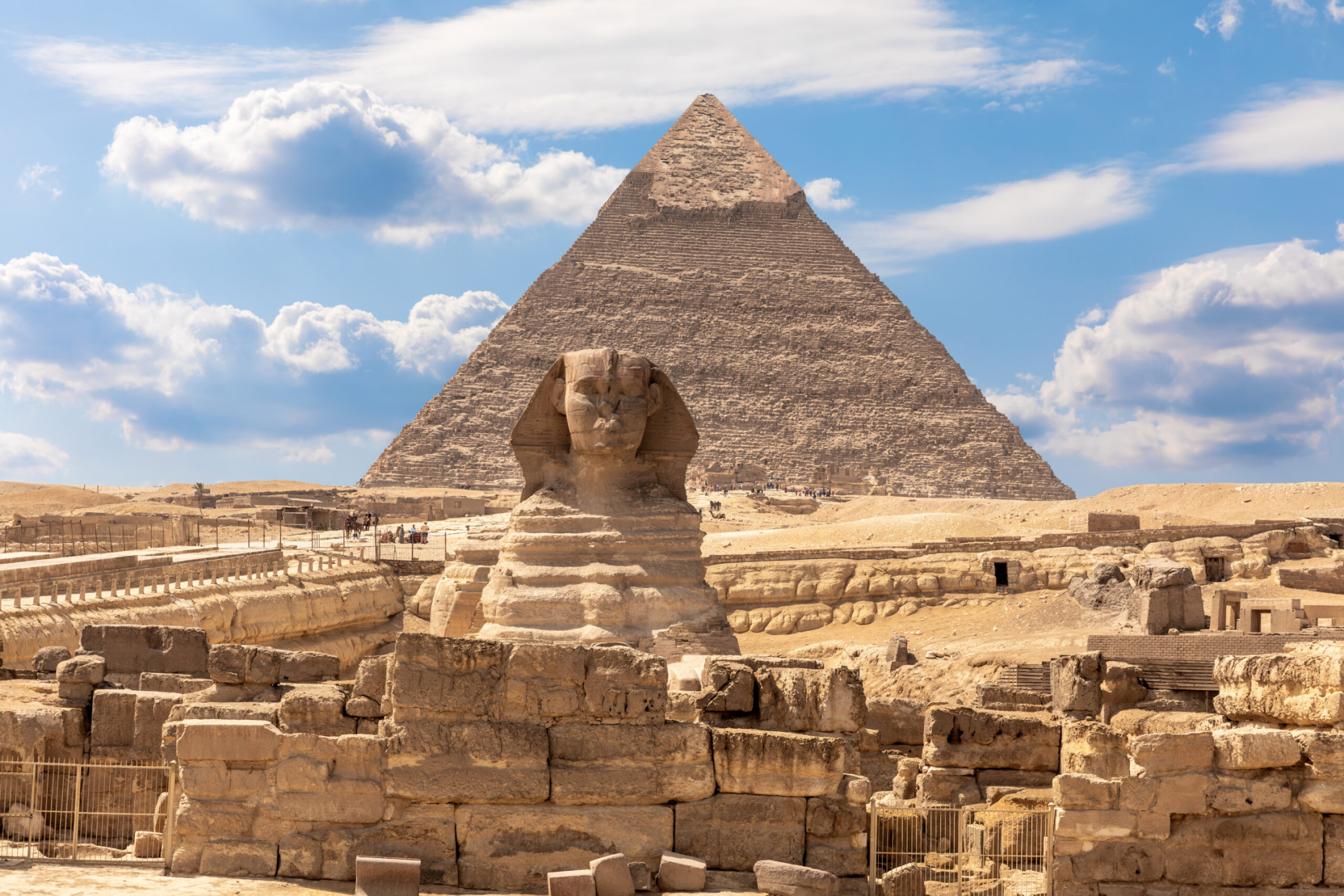
When you picture the Great Pyramids of Giza, chances are you imagine them as they appear today—massive, weathered monuments of sandy limestone rising out of the desert. Impressive, yes, but also ancient and worn, their surfaces rough and uneven after thousands of years of sun, wind, and shifting sands.
But here’s the twist: when the pyramids were first built, they didn’t look like this at all. They weren’t dull and sandy—they were brilliant, blindingly bright structures that gleamed under the Egyptian sun. The Great Pyramid of Khufu, in particular, was once covered in smooth, polished white limestone casing stones, cut so precisely and fitted so tightly that the surface would have looked like a single sheet of stone.
Imagine a 450-foot-tall pyramid, not the faded golden color we know today, but a shimmering white beacon that reflected sunlight so strongly it could be seen for miles, even across the Nile. To the ancient world, it must have seemed otherworldly, a monument that captured the sun itself. Some historians believe that at certain times of day, the pyramids would have shone so brightly they resembled giant mirrors in the desert.
The effect wasn’t just visual. Symbolically, the brilliance of the pyramids likely held deep meaning for the Egyptians. The reflective surfaces may have been intended to represent the rays of the sun god Ra, connecting the pharaoh entombed inside with the divine. In a civilization where religion and rulership were tightly woven, the pyramids weren’t just tombs—they were statements of cosmic significance.
So what happened to the shine? Over centuries, earthquakes, erosion, and human activity stripped away most of the casing stones. Many of the remaining pieces were removed during the Middle Ages and repurposed to build mosques and other structures in Cairo. Today, only a few casing stones remain at the base of the Great Pyramid, offering a glimpse of how stunning the monument once looked in its prime.
It’s easy to forget that the pyramids we see today are not the pyramids the ancient Egyptians saw. Time has weathered away their original form, leaving us with ruins that are still awe-inspiring but incomplete. When the pyramids were new, they weren’t just architectural marvels—they were dazzling symbols of power, light, and eternity.
And the Great Pyramid wasn’t alone. The other pyramids at Giza, as well as earlier ones like the Bent Pyramid and the Red Pyramid at Dahshur, also had smooth outer casings that transformed them into radiant, geometric shapes against the horizon. Archaeologists believe the Red Pyramid originally had white limestone casing that would have given it the same gleaming appearance, despite its core being made of red stone.
What makes this fact so compelling is how it changes our perception of something we think we know so well. The pyramids are among the most photographed monuments in the world, and yet the image we carry in our minds is only a shadow of what they were. The ancients didn’t build crumbling stone stacks—they built brilliant, polished wonders designed to capture both sunlight and imagination.
There’s a lesson tucked inside this historical detail. Just as the pyramids have changed with time, so too do the things we inherit from history. We rarely see the full picture. What we call ruins were once thriving. What looks faded was once vibrant. The world is always shifting, and sometimes the past is more dazzling than we give it credit for.
So the next time you see an image of the Great Pyramid, try to imagine it as it once was: a luminous white mountain blazing under the desert sun, announcing to all who saw it that this was no ordinary structure. It was a bridge between earth and sky, a symbol of kings and gods, and a wonder designed to last for eternity. And in many ways, it has.
RECENT

Creating a Cozy Home That Supports Your Well-Being
Health & Wellness

5 Easy Ways to Prepare for the Next Season Before It Takes Over
Health & Wellness

Your 40s Aren’t Just About Hormones — They’re About Your Heart
Uncategorized

Wellness Benefits of Pumpkin Season
Health & Wellness

Fall Into Wellness: Creating a Healthier Autumn Routine
Health & Wellness

How to Prepare for Holiday Stress Before It Takes Over
Fitness
🇺🇸 Why the Liberty Bell Doesn’t Actually Ring Anymore
Did You Know?

A Rock Star’s Road to Redemption
Entertainment
New York Community Replaces Defaced Declaration Replica
America

How Four Seconds Can Help Calm the Mind
Friday Fuel
BE THE FIRST TO KNOW
Want to stay in the loop? Be the first to know! Sign up for our newsletter and get the latest stories, updates, and insider news delivered straight to your inbox.

More Content By
Think American News Staff🇺🇸 Why the Liberty Bell Doesn’t Actually Ring Anymore
Did You Know?
A Rock Star’s Road to Redemption
Entertainment
New York Community Replaces Defaced Declaration Replica
America

Kentucky Bridge Project Gets $24M Boost
American Infra
Arizona Extends Farm Water Fee Relief
In The States

Michigan Storm Recovery Gets Bipartisan Federal Boost
In The States

Canada Says Goodbye To Country Gentleman Tommy Hunter
Entertainment

PA Lawmakers Focus on Energy
Energy

John Adams Saw America’s Future Before Anyone Else
America
The Revolutionary Ideas Behind July 4
Did You Know?
View All Content By Think American News Staff