Adobe Stock/Prostock-studio

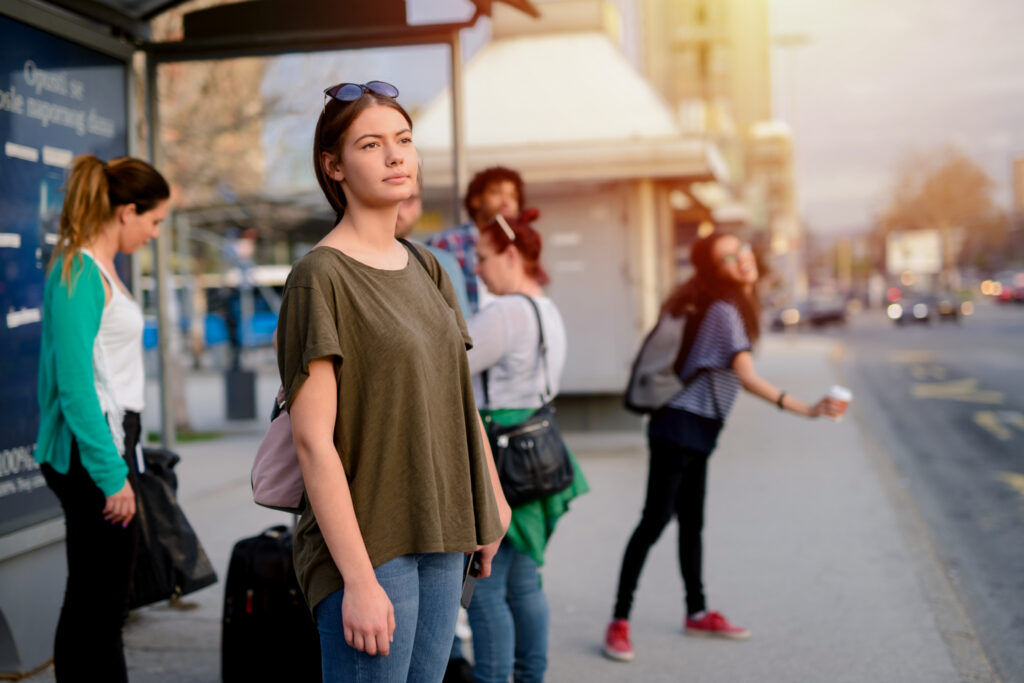
There are moments in life that are so small they almost pass unnoticed. No big headlines. No breaking news alerts. No dramatic turning points. Just ordinary, everyday interactions.
But sometimes those small moments say more about who we are—and who we could be—than the biggest national debates.
Just yesterday, my husband and I were walking through the mall. Like most malls these days, it was a mix of people moving quickly from store to store, others browsing, some pushing strollers, and a few simply enjoying a slow afternoon out of the house. Everyone seemed to be in their own lane, eyes forward, minds on their to-do lists.
As we passed a woman walking the other direction, Jason did something simple.
He smiled.
She looked up, caught the smile, and immediately lit up. A big grin spread across her face and she offered an enthusiastic, “Hello!”
I immediately replied to her hello, not knowing what was happening, with a “Hi, how are you?”
It wasn’t forced. It wasn’t awkward. It was genuine.
And for a brief moment, three strangers shared something that seems increasingly rare these days: a warm, human connection.
A Small Gesture That Meant Something
That interaction lasted maybe two seconds.
But it stuck with me the rest of the day.
In a world where people often walk with their heads down, staring at their phones or rushing past one another, the simple act of acknowledging another person can feel surprisingly powerful.
That woman’s reaction wasn’t just polite—it was joyful.
It was as if she had been waiting for someone to notice her existence in that crowded space. A smile. A hello. A moment of shared humanity.
And honestly, it reminded me how little it takes to brighten someone’s day.
We tend to think kindness has to be something grand or dramatic. Donating large sums of money. Organizing major volunteer efforts. Solving big social problems.
Those things matter, of course.
But everyday civics—the kind that shapes the tone of our communities—often lives in the smallest interactions.
The Quiet Erosion of Everyday Courtesy
Somewhere along the way, we have slowly drifted away from these simple gestures.
Eye contact has become optional.
Smiling at strangers sometimes feels unusual.
And saying hello to someone you don’t know can almost feel like breaking an unspoken rule.
But it wasn’t always that way.
For generations, Americans understood that civility in public spaces helped build stronger communities. You greeted your neighbors. You nodded to people you passed on the sidewalk. You held the door open for the person behind you.
None of those actions required effort or sacrifice.
They were simply signs of respect.
They were reminders that the people around us matter.
When we lose those habits, we don’t just lose politeness—we lose connection.
Living Civics in Real Time
That moment at the mall was a perfect reminder of what this Living Civics series is all about.
Civics isn’t just about government, policy debates, or election cycles.
It’s also about how we show up for each other in everyday life.
A smile in a crowded hallway.
A hello to someone passing by.
A small acknowledgment that says, “I see you.”
Those tiny interactions create the fabric of community. They soften the edges of busy days and remind us that we’re all navigating life together.
You never know what someone else is carrying with them—a stressful day, a difficult phone call, or a quiet loneliness that isn’t visible on the surface.
But a friendly smile or greeting can shift the mood of an entire moment.
Sometimes, that’s all it takes.
This Week’s Living Civics Challenge
So here’s a simple challenge for the week ahead.
Put your phone down when you’re walking through a public space.
Look up.
Make eye contact.
Smile.
Say hello.
You may be surprised how often someone lights up in return.
And who knows—you might just brighten someone’s day in the exact moment they needed it most.
Because sometimes the most meaningful acts of citizenship begin with something as simple as a smile.
RECENT

Rep. Kristin Marcell Launches Student Contest in PA
In The States
The Most Honest Holiday Lineup
Uncategorized
KY Invests in Autism Care
Autism
Filibuster Fight Divides GOP
Politics
Indiana Delivers Veteran Relief
In Service

Why Easter Still Matters
Holidays
Wisconsin Bets Big on Forestry Future
In The States

Success Starts with Failure
Did You Know?

A Dog’s Last Lesson
Animals
America in Bloom This Weekend
Dating
BE THE FIRST TO KNOW
Want to stay in the loop? Be the first to know! Sign up for our newsletter and get the latest stories, updates, and insider news delivered straight to your inbox.

More Content By
Jessica Curtis
Four Astronauts, One Perspective: A Lesson for Earth
Kindness

Built to Last
Marriage

Kindness in the Crossroads
Living Civics
The Power of a Simple Hello
Living Civics
A Simple Rule for a Better Society
Living Civics

A Little More Sparkle, A Lot More Grace
Kindness

More Than Gold: The Olympics and a Brief Return to Shared Pride
Living Civics

Why Being Nice Still Matters at the Checkout Line
Living Civics
When a Dog’s Nose Saves Lives
Animals

A Tale of Two Halftime Shows
Living Civics
View All Content By Jessica Curtis