May 06
Animals
Effort Underway to Study and Safeguard Salt River Horse Herd
Adobe Stock/AP
A Pause on Horse Removals
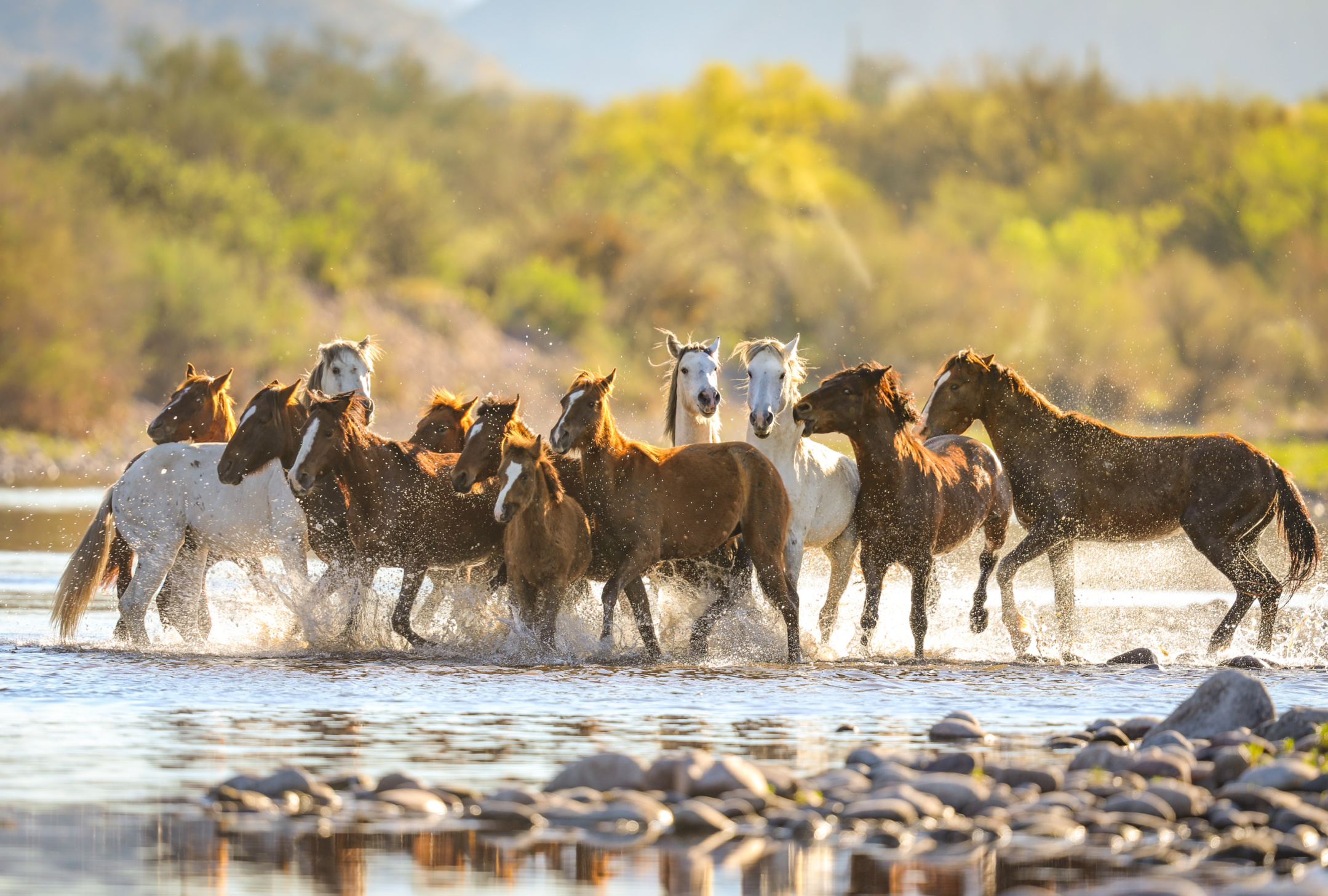
State Representative Cody Reim is leading an effort to temporarily halt the removal of horses from the Salt River herd, located within the Tonto National Forest. The proposal comes as current management plans call for reducing the herd by as many as 150 horses beginning this year.
“The current management group is being forced to reduce the Salt River herd by as many as 150 horses, starting this year,” said Representative Reim. “These horses are a cherished part of Arizona’s heritage, and Arizonans have made it clear they do not want them rounded up and removed to satisfy arbitrary population targets. This bill protects the herd and keeps these horses where they belong.”
Under the legislation, removals from the Salt River Horse Management Area would be paused for three years, with limited exceptions for urgent medical needs and veterinary care.
Focus on Long-Term Herd Health
Supporters of the measure say the temporary halt would provide time for a comprehensive study aimed at ensuring the herd’s long-term health. The proposed research would examine genetic diversity and determine the minimum population needed to sustain a viable and healthy herd.
The study is expected to be scientifically supported and peer-reviewed, offering data that could guide future management decisions.
“I was sent here to protect Arizona’s communities, values, and heritage,” Reim said. “SB 1199 gives us time to pursue a responsible path that supports the herd’s long-term health.”
Wild horse populations can face challenges when herd sizes become too small, potentially leading to reduced genetic diversity. Advocates of the bill argue that understanding these dynamics is critical before making large-scale population reductions.
Emergency Clause Speeds Timeline
An amendment to the legislation, introduced by State Representative Pamela Carter, would allow the measure to take effect immediately if signed into law. The emergency clause is designed to prevent additional removals while the bill moves through the legislative process.
“I sponsored the emergency clause amendment so these protections can take effect immediately once the bill is signed,” Carter said.
Carter also noted that the Arizona Department of Agriculture has the authority to amend its contract with the current management group at any time, including to halt removals. However, she said such changes have not yet been made.
“The Department of Agriculture has acknowledged it can amend its contract with the management group at any time, including right now, to stop additional removals,” Carter said. “Yet the Department has not offered to amend the contract. Immediate action is needed to preserve the herd.”
Balancing Conservation and Management
The debate over the Salt River horses highlights a broader challenge faced by land managers across the West: balancing wildlife conservation with environmental sustainability and land use.
Wild horse herds are often managed to prevent overgrazing and protect ecosystems, but removal efforts can generate public concern, particularly when the animals are seen as cultural or historical symbols.
In Arizona, the Salt River horses have become a point of pride for many residents and visitors, drawing attention for their presence along the river and their connection to the region’s Western heritage.
Next Steps for the Proposal
The legislation, known as SB 1199 and amended by Representative Reim, has gained support from multiple lawmakers as it advances through the legislative process.
If approved and signed into law, the measure would initiate a three-year pause on removals while researchers study the herd’s genetic health, potentially shaping future policy decisions around wild horse management in Arizona.
RECENT
🇺🇸 Why the Liberty Bell Doesn’t Actually Ring Anymore
Did You Know?

A Rock Star’s Road to Redemption
Entertainment

New York Community Replaces Defaced Declaration Replica
America

How Four Seconds Can Help Calm the Mind
Friday Fuel

Heather Jenkins and The Power of Intentional Rest
Health & Wellness

Kentucky Bridge Project Gets $24M Boost
American Infra
Arizona Extends Farm Water Fee Relief
In The States

Macaroni, Dive Bars and Sundaes: July 7 Gets Weird
Offbeat Observances

Michigan Storm Recovery Gets Bipartisan Federal Boost
In The States

Canada Says Goodbye To Country Gentleman Tommy Hunter
Entertainment
BE THE FIRST TO KNOW
Want to stay in the loop? Be the first to know! Sign up for our newsletter and get the latest stories, updates, and insider news delivered straight to your inbox.

More Content By
Think American News Staff🇺🇸 Why the Liberty Bell Doesn’t Actually Ring Anymore
Did You Know?
A Rock Star’s Road to Redemption
Entertainment
New York Community Replaces Defaced Declaration Replica
America
Kentucky Bridge Project Gets $24M Boost
American Infra
Arizona Extends Farm Water Fee Relief
In The States
Michigan Storm Recovery Gets Bipartisan Federal Boost
In The States
Canada Says Goodbye To Country Gentleman Tommy Hunter
Entertainment
PA Lawmakers Focus on Energy
Energy

John Adams Saw America’s Future Before Anyone Else
America

The Revolutionary Ideas Behind July 4
Did You Know?
View All Content By Think American News Staff