May 25
Religion
Gallup: 1 in 5 Americans Have No Religion as Generational Shift Reshapes Faith in U.S.
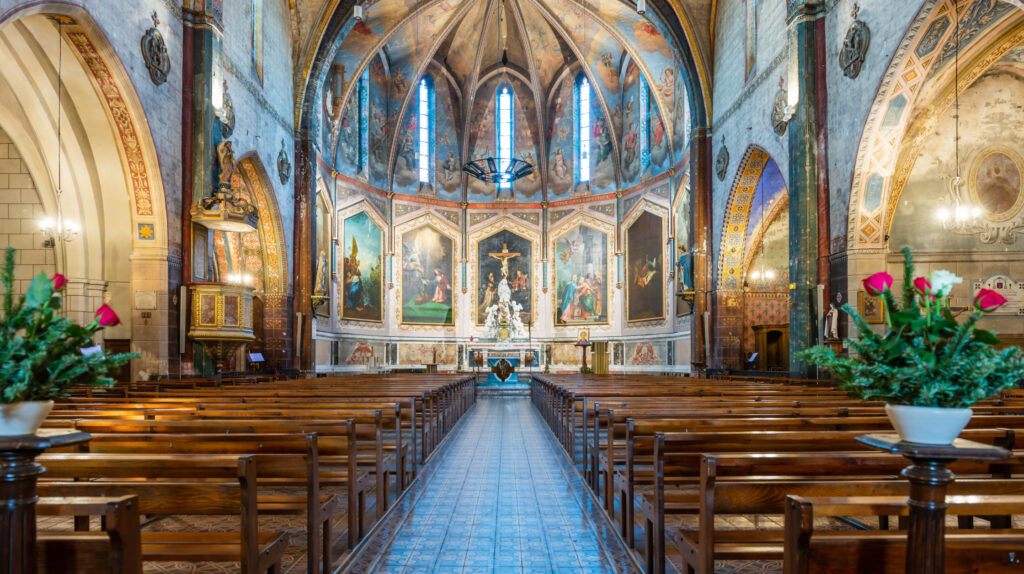
Adobe Stock/Pixel-Shot/stock.adobe.com

Younger Americans continue to move away from formal religion, even as national trends stabilize
As Americans gather for religious holidays this spring—Easter, Passover, and the close of Ramadan—new data reveals a notable trend: religious preferences in the U.S. have largely stabilized since 2020, following two decades of steady decline in Christian affiliation and a significant rise in those with no religious preference.
According to new Gallup polling that surveyed over 12,000 adults in 2024, 45% of Americans now identify as Protestant or nondenominational Christian, 21% as Catholic, 10% with another religion, and 22% as having no religious affiliation at all. These figures are nearly unchanged from what Gallup recorded in the 2018–2020 window.
In the year 2000, Gallup reported that 57% of Americans identified as Protestant or nondenominational Christian, and 25% as Catholic. Only 8% claimed no religious affiliation. Over the past two decades, those numbers have steadily shifted—until now.
Today, nearly one in four Americans are religiously unaffiliated. But over the last five years, that figure has held relatively constant, suggesting the U.S. may be entering a new era of religious stability—at least in the short term.
Combined polling data from the last five years shows the presence of smaller religious groups within the U.S. landscape:
- 2.2% of adults identify as Jewish
- 1.5% as Latter-day Saints or Mormon
- Less than 1% each as Muslim, Buddhist, Orthodox Christian, or Hindu
- 6% gave either non-specific responses like “spiritual” or chose not to answer
Overall, 69% of Americans still identify with a Christian religion, while 4% align with a non-Christian faith.
Beneath the surface of national stability lies a powerful generational shift. While 84% of Americans identified with Christianity at the start of the 21st century, that number has fallen to 69% today—a decline largely fueled by younger generations moving away from organized religion.
Among Gen Z adults (ages 18 to 27 in 2024), more than 30% report no religious affiliation. Millennials (ages 28 to 43) are close behind. That contrasts sharply with older generations: fewer than 10% of Silent Generation members (79+) and only about 12% of Baby Boomers say they have no religious affiliation.
Even among those who remain religious, Gen Z and millennials are far less likely to identify as Protestant or Catholic. Only 54% of Gen Z and 58% of millennials say they affiliate with a Christian faith, compared with more than 70% of older generations.
While some of the religious shift is attributed to generational replacement—young, less religious adults replacing older, more religious ones—Gallup data shows that within each generation, the number of adults disaffiliating from religion has also grown over time.
- Gen X, Baby Boomers, Silent Generation: The share with no religious affiliation has increased 2–3 percentage points in each of the past two decades.
- Millennials: The growth has been sharper. In 2000–2004, 16% of millennials identified as religiously unaffiliated. That rose to 24% a decade later, and now stands at 31%.
These increases have come primarily at the expense of Protestant affiliation in older generations and both Protestant and Catholic affiliation in younger ones.
The rapid rise of the religiously unaffiliated—often referred to as “nones”—appears to have leveled off, at least for now. Still, the generational breakdown suggests the U.S. may not be done with religious transformation.
If the trends continue, Christian identification could drop into the 50% range within a generation. Millennials are already replacing older generations as parents, educators, and civic leaders—bringing with them different views on religion and spirituality.
Yet, it’s not a complete rejection of faith. While many young Americans avoid formal religious labels, some continue to explore personal forms of spirituality or engage with faith in less traditional ways.
As America’s religious landscape evolves, it reflects broader social shifts—from changes in institutional trust to growing diversity and increased focus on individual identity. For now, religious affiliation in the U.S. has reached a plateau. But as younger Americans age into leadership roles and raise the next generation, the question is no longer if American religiosity will change—but how fast, and in what direction.
RECENT
🇺🇸 Why the Liberty Bell Doesn’t Actually Ring Anymore
Did You Know?

A Rock Star’s Road to Redemption
Entertainment

New York Community Replaces Defaced Declaration Replica
America

How Four Seconds Can Help Calm the Mind
Friday Fuel

Heather Jenkins and The Power of Intentional Rest
Health & Wellness

Kentucky Bridge Project Gets $24M Boost
American Infra

Arizona Extends Farm Water Fee Relief
In The States

Macaroni, Dive Bars and Sundaes: July 7 Gets Weird
Offbeat Observances

Michigan Storm Recovery Gets Bipartisan Federal Boost
In The States

Canada Says Goodbye To Country Gentleman Tommy Hunter
Entertainment
BE THE FIRST TO KNOW
Want to stay in the loop? Be the first to know! Sign up for our newsletter and get the latest stories, updates, and insider news delivered straight to your inbox.

More Content By
Think American News Staff🇺🇸 Why the Liberty Bell Doesn’t Actually Ring Anymore
Did You Know?
A Rock Star’s Road to Redemption
Entertainment
New York Community Replaces Defaced Declaration Replica
America
Kentucky Bridge Project Gets $24M Boost
American Infra
Arizona Extends Farm Water Fee Relief
In The States
Michigan Storm Recovery Gets Bipartisan Federal Boost
In The States
Canada Says Goodbye To Country Gentleman Tommy Hunter
Entertainment
PA Lawmakers Focus on Energy
Energy

John Adams Saw America’s Future Before Anyone Else
America
The Revolutionary Ideas Behind July 4
Did You Know?
View All Content By Think American News Staff