
May 23
Kindness
How Kindness Helped Joplin, MO Heal After Disaster
FEMA
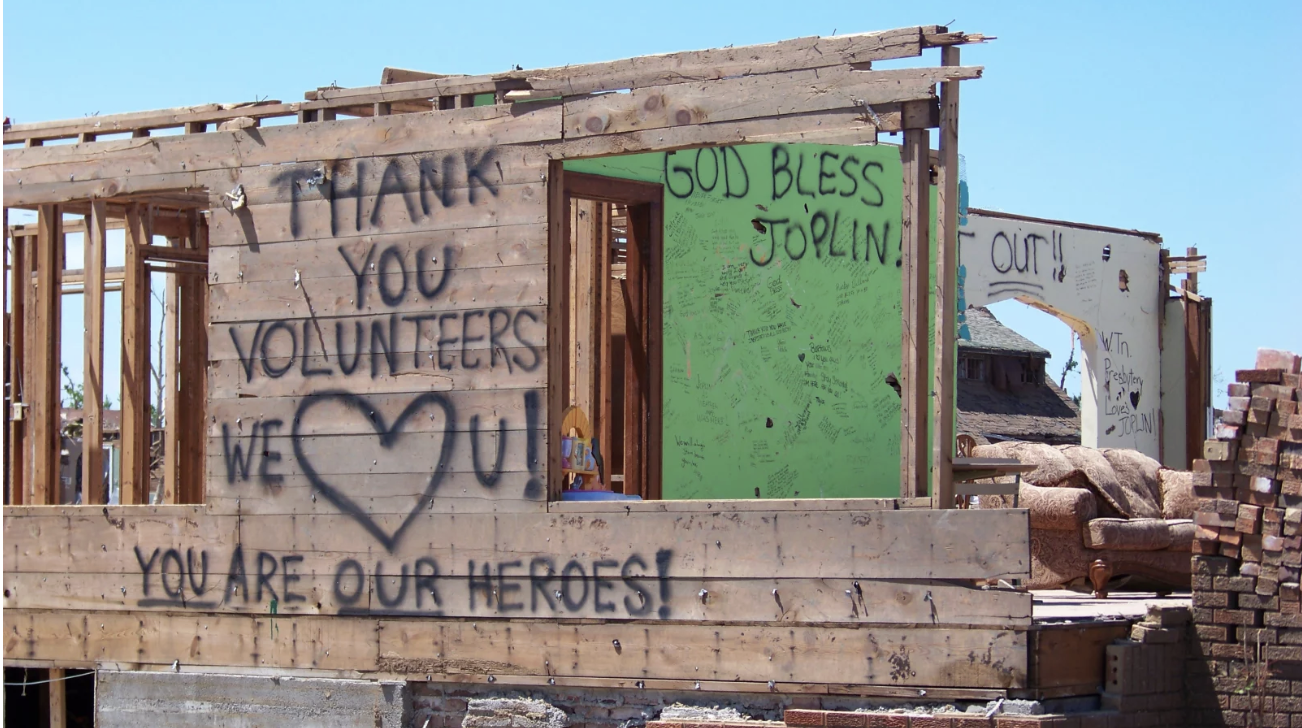
It’s the compassion that followed.
On May 22, 2011, a massive tornado with winds reaching nearly 200 miles per hour devastated the Missouri community, killing nearly 160 people, destroying thousands of homes, and displacing roughly a third of the city’s population.
But in the days, weeks, and months after the storm, Joplin became nationally known for something else:
An overwhelming outpouring of kindness.
A Community Flooded With Help
According to the report, nearly 100,000 volunteers from across the country traveled to Joplin after the tornado to help clear debris, rebuild homes, serve meals, and support grieving families.
Residents remember strangers arriving with chainsaws, food, supplies, and open hearts.
Some ranchers cooked steaks for volunteers.
A university dean who lost his own home helped organize emergency shelters.
Someone even dressed as a clown to make balloon animals for children staying in shelters.
“People came out of the woodwork,” recalled Darren Fullerton, who helped run a Red Cross emergency shelter after the storm.
How Disaster Brought People Together
Former vice mayor Melodee Colbert-Kean said the tragedy temporarily erased many of the divisions that often separate people.
“It didn’t matter what color you were, whether you were Republican, Democrat, independent, whatever,” she said. “You saw a need, and you tried to fill that need the best you could.”
Psychologists call this phenomenon “catastrophe compassion” — the idea that major disasters often trigger extraordinary levels of empathy, cooperation, and generosity between strangers.
Stanford social psychologist Jamil Zaki explained that crises can temporarily replace everyday divisions with a shared sense of survival and humanity.
A Personal Story of Healing
For survivor Nanda Nunnelly, the storm changed her life in deeply personal ways.
As she hid in a closet during the tornado, convinced she might die, she suddenly thought about a girl she had bullied years earlier in middle school.
After surviving the storm, Nunnelly reached out years later to apologize.
The experience also inspired her to dedicate more of her life to helping others. She eventually joined the board of a community center that assists unhoused residents during extreme weather emergencies.
“I don’t know how anyone could go through that and not think about how can I help the next person,” she said.
Keeping the Spirit Alive
Today, organizations like One Joplin continue carrying forward the spirit of unity and service that emerged after the tornado.
The group now focuses on affordable housing, helping working families, and strengthening community connections.
For many survivors, the invisible bond formed during those difficult days still remains.
And 15 years later, Joplin’s story continues serving as a reminder that even in moments of unimaginable tragedy, people are still capable of extraordinary compassion.
RECENT
🇺🇸 Why the Liberty Bell Doesn’t Actually Ring Anymore
Did You Know?

A Rock Star’s Road to Redemption
Entertainment
New York Community Replaces Defaced Declaration Replica
America
How Four Seconds Can Help Calm the Mind
Friday Fuel

Heather Jenkins and The Power of Intentional Rest
Health & Wellness

Kentucky Bridge Project Gets $24M Boost
American Infra
Arizona Extends Farm Water Fee Relief
In The States

Macaroni, Dive Bars and Sundaes: July 7 Gets Weird
Offbeat Observances
Michigan Storm Recovery Gets Bipartisan Federal Boost
In The States

Canada Says Goodbye To Country Gentleman Tommy Hunter
Entertainment
BE THE FIRST TO KNOW
Want to stay in the loop? Be the first to know! Sign up for our newsletter and get the latest stories, updates, and insider news delivered straight to your inbox.

More Content By
Think American News Staff🇺🇸 Why the Liberty Bell Doesn’t Actually Ring Anymore
Did You Know?
A Rock Star’s Road to Redemption
Entertainment
New York Community Replaces Defaced Declaration Replica
America
Kentucky Bridge Project Gets $24M Boost
American Infra
Arizona Extends Farm Water Fee Relief
In The States
Michigan Storm Recovery Gets Bipartisan Federal Boost
In The States
Canada Says Goodbye To Country Gentleman Tommy Hunter
Entertainment
PA Lawmakers Focus on Energy
Energy

John Adams Saw America’s Future Before Anyone Else
America
The Revolutionary Ideas Behind July 4
Did You Know?
View All Content By Think American News Staff