Adobe Stock/Andrea Izzotti
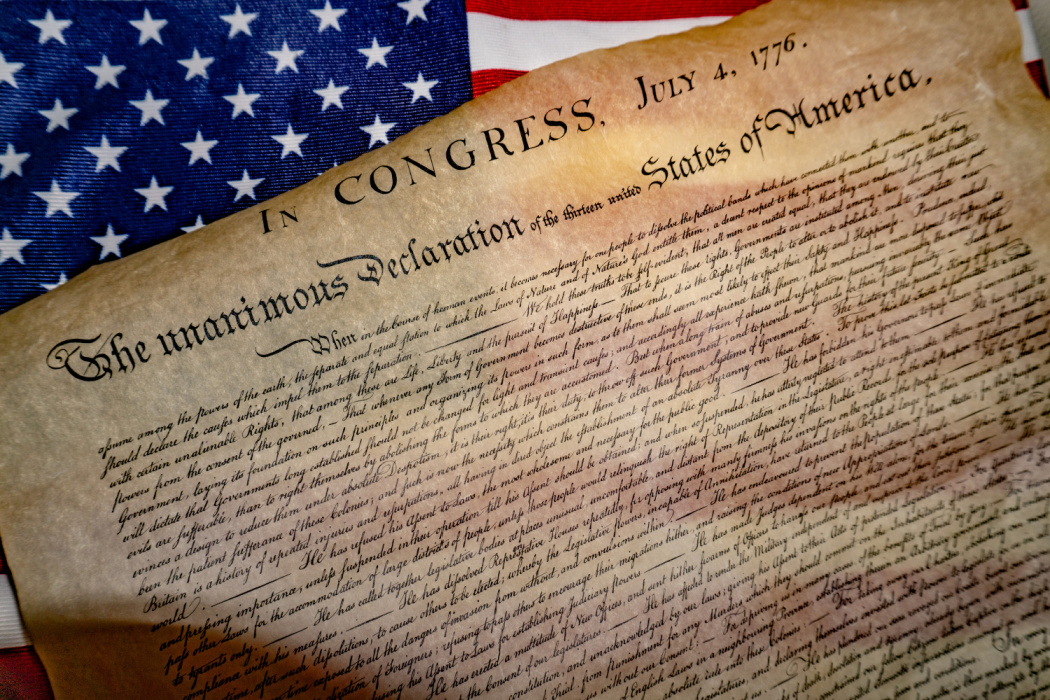
Every Fourth of July, Americans gather for parades, backyard barbecues, concerts, and fireworks. We celebrate the birth of our nation with family and friends, often without giving much thought to the document that made the day possible.
The Declaration of Independence is one of the most famous documents in history.
But what made it truly revolutionary wasn’t simply that it announced America’s separation from Great Britain.
It was the bold new ideas it introduced to the world.
More Than a Break from Britain
When the Continental Congress adopted the Declaration on July 4, 1776, the colonies weren’t just rejecting the authority of King George III.
They were challenging a centuries-old belief about government itself.
For generations, kings ruled because they claimed a “divine right” to govern. Power flowed from the top down, and ordinary people had little say in how they were governed.
The Declaration turned that idea upside down.
Instead, it proclaimed that governments derive “their just powers from the consent of the governed.”
In other words, government exists because the people allow it—not the other way around.
That was a revolutionary concept.
The Power of Natural Rights
Perhaps the Declaration’s most enduring words are these:
“We hold these truths to be self-evident, that all men are created equal…”
It continues by recognizing the unalienable rights of “Life, Liberty and the pursuit of Happiness.”
These weren’t rights granted by a king or government.
The Declaration argued they belonged to every person simply because they were human.
That idea transformed political thought around the world and continues to influence democracies nearly 250 years later.
A Message That Echoed Around the Globe
Although written for thirteen colonies on the eastern coast of North America, the Declaration’s influence quickly spread far beyond them.
Its principles inspired movements for independence and self-government across Europe, Latin America, and beyond. Leaders seeking freedom often looked to America’s founding document as proof that ordinary people could shape their own future.
Its words became more than a declaration.
They became an aspiration.
Even as America continued striving to live up to those ideals, the document provided a standard against which future generations could measure progress.
A Living Legacy
The Declaration has remained relevant because it speaks to timeless principles rather than temporary politics.
Its message reminds Americans that freedom carries responsibility.
That liberty requires courage.
And that each generation inherits both the blessings and the duty of preserving self-government.
Nearly every generation of Americans has returned to its words during moments of challenge, asking how the nation can better fulfill the promise first articulated in Philadelphia.
Why It Still Matters Today
As America celebrates its 250th anniversary, the Declaration of Independence remains more than a historical artifact tucked safely behind glass.
It is a reminder that bold ideas can change history.
That ordinary people can accomplish extraordinary things.
And that freedom is never simply inherited—it is understood, appreciated, and protected by each new generation.
So this Independence Day, as fireworks light the night sky and flags wave across communities large and small, remember that the greatest spark of July 4 wasn’t the fireworks.
It was the idea that a free people could govern themselves.
Nearly two and a half centuries later, that idea still shines.
RECENT

Your 40s Aren’t Just About Hormones — They’re About Your Heart
Uncategorized

Wellness Benefits of Pumpkin Season
Health & Wellness

Fall Into Wellness: Creating a Healthier Autumn Routine
Health & Wellness

How to Prepare for Holiday Stress Before It Takes Over
Fitness
🇺🇸 Why the Liberty Bell Doesn’t Actually Ring Anymore
Did You Know?

A Rock Star’s Road to Redemption
Entertainment
New York Community Replaces Defaced Declaration Replica
America
How Four Seconds Can Help Calm the Mind
Friday Fuel

Heather Jenkins and The Power of Intentional Rest
Health & Wellness

Kentucky Bridge Project Gets $24M Boost
American Infra
BE THE FIRST TO KNOW
Want to stay in the loop? Be the first to know! Sign up for our newsletter and get the latest stories, updates, and insider news delivered straight to your inbox.

More Content By
Think American News Staff🇺🇸 Why the Liberty Bell Doesn’t Actually Ring Anymore
Did You Know?
A Rock Star’s Road to Redemption
Entertainment
New York Community Replaces Defaced Declaration Replica
America
Kentucky Bridge Project Gets $24M Boost
American Infra

Arizona Extends Farm Water Fee Relief
In The States

Michigan Storm Recovery Gets Bipartisan Federal Boost
In The States

Canada Says Goodbye To Country Gentleman Tommy Hunter
Entertainment
PA Lawmakers Focus on Energy
Energy

John Adams Saw America’s Future Before Anyone Else
America
The Revolutionary Ideas Behind July 4
Did You Know?
View All Content By Think American News Staff