
Aug 10
Opinion
Shock Verdict, But Where’s the Full Story? Dissecting the Tesla and Musk Legal Battle
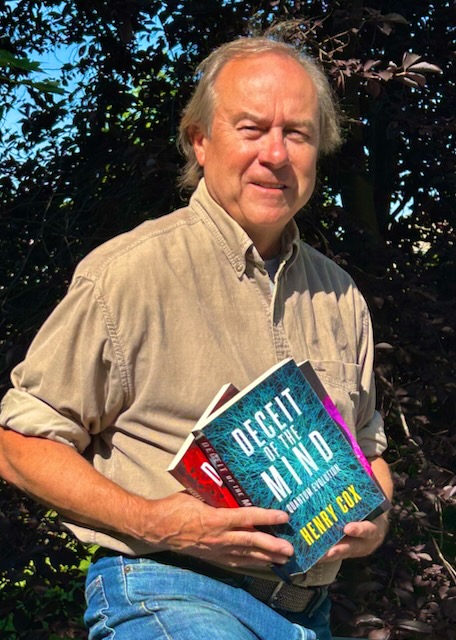
By Henry Cox
Adobe Stock/RomanR/stock.adobe.com

Shock headlines on celebrity-type trials can leave the public less informed.
Recent headlines read something like, “A Florida jury slams Tesla and Musk with $345 million damage verdict for wrongful death.” While the case has lots of complex legal and factual issues, virtually all news stories omit or gloss over some important and intriguing facts.
Did the car or the driver kill the person? Many of these “product defect” cases against Tesla are dismissed because of the legal standards to prove a strict-liability products liability case. It is also rare that a court would allow the jury to assess punitive damages in such a case because of the high standard of “intent to harm” or “gross negligence.” In fact, a Florida appeals court has previously said Tesla cannot be assessed punitive damages in a similar case.
In the recent Benevides v. Tesla case, the jury awarded $109 million in compensatory damages and $236 million in punitive damages. However, Tesla was only found 33% at fault. So, the $109 million will presumably be reduced to $36.3 million. The driver (McGee) was found 67% at fault; however, he and his insurance company entered into a private settlement before the trial – most likely the “policy limits” and a negotiated sworn statement favorable to the plaintiffs’ theories against Tesla.
McGee specifically bought his Tesla three months before the deadly accident in 2019 because he wanted the Autopilot feature for routine long drives. The Autopilot instructions, manuals, and dash video screen all warn that the car is not self-driving and the driver must maintain control of the car with hands on the wheel. When the system detects five driving errors (such as hands not on the wheel), the driver gets a “strike”. In 2019, five strikes is a “strikeout,” and the Autopilot is automatically turned off and cannot be used until the car is turned off and restarted.
In those three months, McGee had 23 Strikeouts. On the day of the accident, McGee had only one strike left before the Autopilot would shut down. Thirty seconds before the accident, McGee turned off certain features of the Autopilot; otherwise, the car would not go faster than 45mph on Autopilot if not on a highway. Approaching a three-way stop where he would turn to get to the highway, he dropped his cell phone, ducked his head below the dash, and was “fishing” for his phone.
In this 1.65 second set of events, the driver accelerated to 62mph, running the Stop sign, missed his turn, and headed straight onto a rural-type road with culvert ditches on the sides. He slammed into a parked Chevy Tahoe. The woman, Benevides, was standing at the truck with her friend Angulo. The Tahoe slammed into Benevide,s throwing her seventy-five feet, where she died at the scene. Angulo also suffered injuries.
McGee called 911, stating, “Oh my God, I wasn’t looking…I don’t know what happened…I ended up missing the turn. I was looking down. I dropped my phone. Oh my God.” McGee stated to the officer, “It was actually because I was driving…I looked down and I’ve been using cruise control, and I looked down. I didn’t realize…and then I sat up. The minute I sat up, I hit the brakes and saw his truck.”
A person may want to hire McGee’s attorney. In January 2020, the criminal judge allowed McGee to plead “no contest” to the charge of “reckless driving.” WHAT???! McGee was assessed a $1,000 fine plus $100 in court fees and required to attend 16 hours of driving school.
The federal judge (an Obama appointee, if that matters) ruled that plaintiff’s experts could testify: (1) that the Autopilot, SAE Level 2 system, still with the driver in control, could have been an SAE Level 3, fully self-driving vehicle, even though in 2019, such systems were almost exclusively used in commercial vehicles, (SAE Level 1 is a common “cruise control”); (2) that new owners should have documented training on the Autopilot system, even though the Manual can be accessed digitally on the video screen; (3) when a driver incurs a strikeout, the Autopilot feature should be electronically suspended from use for one week; (4) the several instructions on the screen when activating Autopilot, for the driver to maintain control, were not sufficient training for a person, such as McGee, who did not bother to read the Manual and presumed the vehicle would automatically stop even if he disabled a feature and manually accelerated beyond the 45mph limit, despite the screen warnings; (5) while the Manual, in several places, warns, “…failure to follow these instructions could cause serious property damage, injury or death,” the Judge ruled these serious consequences were not repeated on the activation screen. Thus, it was an “instruction” and not a “warning.”
There are plenty of additional intriguing facts. The case is appealed and the damage amount may end up being zero if the 11th Circuit Court of Appeals reverses the holding that Tesla had a “design defect” a “failure to warn” or engaged in intentional misconduct or gross negligence – involving a driver who continuously failed to operate the Autopilot correctly with 23 strikeouts, failed to read the Manual on the touchscreen, ignored the immediate instructions/warnings, manually overrode the system, and accelerated to over 60mph while fishing for his cell phone on the car floor.
Courts and juries are perpetually unpredictable, but at least you have more background facts besides the stunning headlines.
RECENT
🇺🇸 Why the Liberty Bell Doesn’t Actually Ring Anymore
Did You Know?

A Rock Star’s Road to Redemption
Entertainment
New York Community Replaces Defaced Declaration Replica
America
How Four Seconds Can Help Calm the Mind
Friday Fuel

Heather Jenkins and The Power of Intentional Rest
Health & Wellness

Kentucky Bridge Project Gets $24M Boost
American Infra

Arizona Extends Farm Water Fee Relief
In The States

Macaroni, Dive Bars and Sundaes: July 7 Gets Weird
Offbeat Observances

Michigan Storm Recovery Gets Bipartisan Federal Boost
In The States
Canada Says Goodbye To Country Gentleman Tommy Hunter
Entertainment
BE THE FIRST TO KNOW
Want to stay in the loop? Be the first to know! Sign up for our newsletter and get the latest stories, updates, and insider news delivered straight to your inbox.
More Content By
Henry Cox
The Manufactured Martyr
Opinion

Why Greenland Matters More Than Politics
Opinion

When Facts Become Background Noise
Opinion

From Taylor Swift to Toilet Seats: A Holiday Reality Check
Holidays

The Internet’s Vanishing Memory
Opinion

Are We All Patients Now? A Look at the Psychology Boom
Health & Wellness

Silence is NOT Violence: Exposing the Kritik Trap
Debate

Breaking the Bubble: How Paradoxical Irony Shapes Our Culture
America

Land, Tariffs, and Taxes: The Forgotten Story of America’s Progressive Power Shift
History
Shock Verdict, But Where’s the Full Story? Dissecting the Tesla and Musk Legal Battle
Opinion
View All Content By Henry Cox