Adobe Stock/Refrina/stock.adobe.com
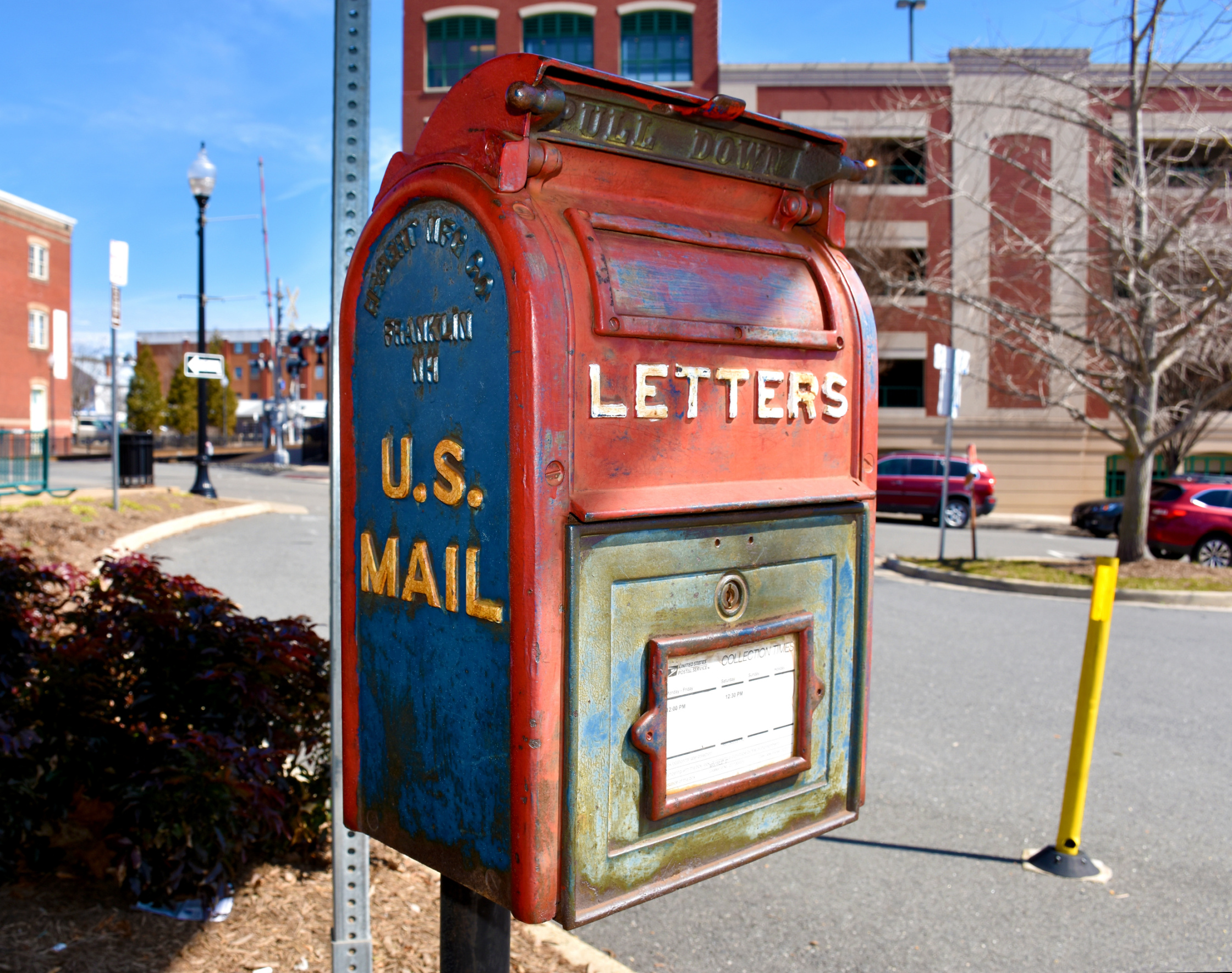
In the summer of 1959, Americans were dreaming big. The space race was just heating up, Cold War tensions buzzed beneath the surface, and innovation was soaring at supersonic speed. But among all the bold ideas flying around—quite literally—few were as peculiar and ambitious as this: delivering mail by missile.
Yes, you read that right. The United States once attempted to revolutionize the postal system using a nuclear-capable cruise missile loaded with 3,000 letters.
The historic event took place on June 8, 1959, when the U.S. Navy launched a Regulus I missile from the submarine USS Barbero off the coast of Virginia. The missile, which was designed to carry a nuclear warhead, was repurposed for this special demonstration by replacing its payload with two official mail containers packed with letters.
The Regulus soared through the air at around 600 miles per hour and traveled over 100 miles to Naval Auxiliary Air Station Mayport near Jacksonville, Florida. The entire journey took about 22 minutes from launch to recovery. No warhead. No weapons. Just U.S. mail flying through the sky on a Cold War-era missile.
The mastermind behind this unusual experiment was Postmaster General Arthur E. Summerfield, who was determined to modernize the postal service and saw technological innovation as the path forward. Upon the successful delivery, Summerfield declared:
“This peacetime employment of a guided missile for the important and practical purpose of carrying mail is the first known official use of missile mail by any post office department of any nation.”
He didn’t stop there. In typical mid-century optimism, he went on to predict that “before man reaches the moon, mail will be delivered within hours from New York to California, to Britain, to India, or Australia by guided missiles.” While that prediction never quite materialized, it captured the spirit of the era—where no idea felt too big, too fast, or too far-fetched.
All 3,000 letters carried aboard the missile were official U.S. postage, addressed to government officials and postal dignitaries around the world. Each envelope bore a special cancellation stamp reading “Missile Mail,” making them instant collector’s items and prized pieces of postal history.
Despite the success of the test, the concept never progressed past that single launch. As exciting as it was, missile mail was wildly impractical. The cost of cruise missiles, the dangers of repurposing military technology for civilian use, and the logistics of safely recovering mail after a high-speed ballistic flight all made it clear: this wasn’t the future of first-class postage.
Still, the event lives on as a fascinating footnote in American history—a moment when imagination and engineering collided in the most literal sense. In a world on the brink of sending people to space, it made perfect sense to wonder: if we can launch satellites, why not launch stamps?
Looking back, it’s easy to smile at the spectacle. But there’s also something undeniably inspiring about it. The missile mail experiment wasn’t just about faster delivery. It was about possibility. It was about stretching the limits of what was considered “normal” in pursuit of progress.
Even though the project was never repeated, it stands as a reminder that sometimes innovation means trying the strange idea just to see if it works. Progress isn’t always linear—and the experiments that don’t take off can still spark imagination in others.
So the next time you drop a letter in the mailbox, think about that summer day in 1959 when 3,000 pieces of mail took flight on a Navy missile. It’s proof that in the pursuit of better, faster, more creative ways to connect people across the world, no idea is too outlandish to try—at least once.
And somewhere out there, probably behind glass in a museum or tucked in a collector’s album, those original “Missile Mail” letters still exist. Little reminders that for one brief moment, the future of mail was rocket-powered.
RECENT

Creating a Cozy Home That Supports Your Well-Being
Health & Wellness

5 Easy Ways to Prepare for the Next Season Before It Takes Over
Health & Wellness

Your 40s Aren’t Just About Hormones — They’re About Your Heart
Uncategorized

Wellness Benefits of Pumpkin Season
Health & Wellness

Fall Into Wellness: Creating a Healthier Autumn Routine
Health & Wellness

How to Prepare for Holiday Stress Before It Takes Over
Fitness
🇺🇸 Why the Liberty Bell Doesn’t Actually Ring Anymore
Did You Know?

A Rock Star’s Road to Redemption
Entertainment
New York Community Replaces Defaced Declaration Replica
America
How Four Seconds Can Help Calm the Mind
Friday Fuel
BE THE FIRST TO KNOW
Want to stay in the loop? Be the first to know! Sign up for our newsletter and get the latest stories, updates, and insider news delivered straight to your inbox.

More Content By
Think American News Staff🇺🇸 Why the Liberty Bell Doesn’t Actually Ring Anymore
Did You Know?
A Rock Star’s Road to Redemption
Entertainment
New York Community Replaces Defaced Declaration Replica
America

Kentucky Bridge Project Gets $24M Boost
American Infra

Arizona Extends Farm Water Fee Relief
In The States
Michigan Storm Recovery Gets Bipartisan Federal Boost
In The States

Canada Says Goodbye To Country Gentleman Tommy Hunter
Entertainment
PA Lawmakers Focus on Energy
Energy

John Adams Saw America’s Future Before Anyone Else
America
The Revolutionary Ideas Behind July 4
Did You Know?
View All Content By Think American News Staff