Adobe Stock/sinseeho

When Dogs Know Before We Do
We call some cancers “silent killers” because they arrive without warning, grow unseen, and announce themselves only when it’s already too late. In dogs, one of the most devastating is hemangiosarcoma — an aggressive cancer that often isn’t detected until a beloved pet suddenly collapses or dies.
That’s why a recent story out of Philadelphia stopped me in my tracks.
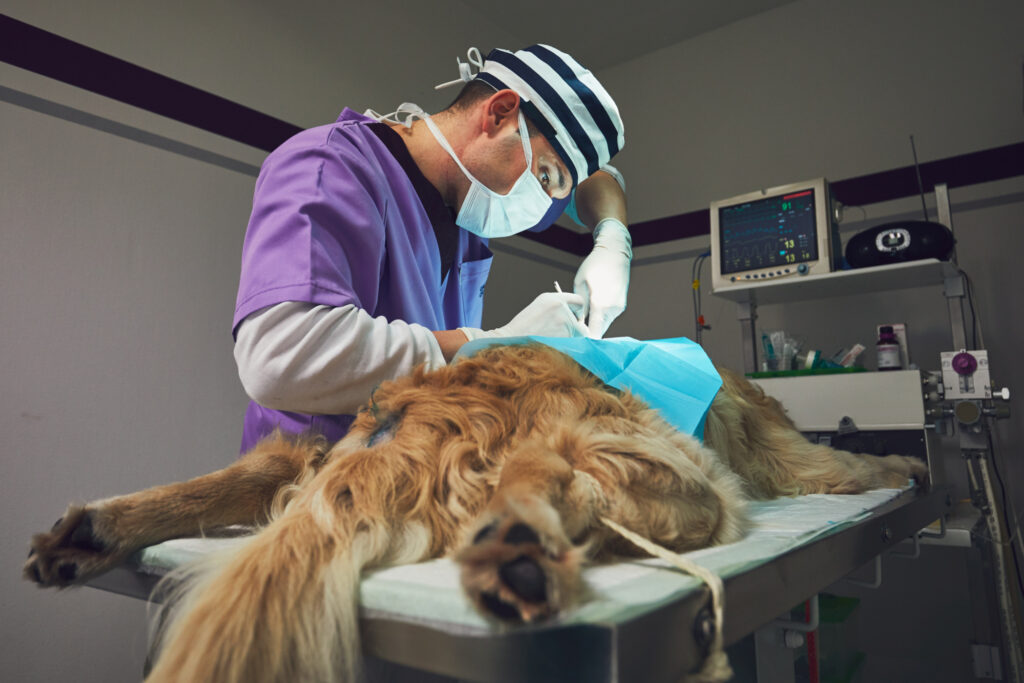
Researchers at the Penn Vet Working Dog Center are training dogs to detect hemangiosarcoma using scent alone. With nothing more than tiny samples of blood serum, these dogs are learning to identify cancer long before traditional diagnostics ever could. In early trials, they’ve been right about 70 percent of the time. When they get it right, they’re rewarded with a treat. When they don’t, they learn and try again.
To some, this sounds extraordinary. To me, it sounds familiar.
My Dogs Sounded the Alarm
Several years ago, my own dogs told me something was wrong — long before a vet ever did.
I have three dogs: Finn, Gus, and Chester. They’re affectionate, playful, and usually more interested in snacks than anything else. But one day, their behavior toward Chester changed in a way I couldn’t ignore.
Finn and Gus wouldn’t stop sniffing him — not the quick, polite “hello” dogs usually exchange, but persistent, focused attention. At the same time, Chester started obsessively chewing at his rear end. It wasn’t subtle. And it wasn’t normal.
That behavior sent us to the vet.
And then — bam. Cancer. One of Chester’s anal glands. Our veterinarian was shocked that Finn and Gus are the reason I was flagged to get Chester in for an appointment.
What hit me hardest wasn’t just the diagnosis. It was realizing that my dogs had known something was wrong before I did. Before bloodwork. Before imaging. Before answers. They didn’t have the language for it — but they had the instincts.
What Dogs Can Smell That We Can’t
That lived experience is exactly what makes the work happening in Philadelphia so powerful.
Dogs experience the world through scent in ways humans simply can’t comprehend. Researchers working with these detection dogs have described how they can smell nothing at all from the samples — while the dogs can reliably identify which one contains cancer.
That’s not magic. It’s biology.
Dogs have hundreds of millions of scent receptors. Their brains are wired to process smell with extraordinary nuance. We already trust dogs to detect explosives, drugs, seizures, and blood sugar changes. Now, researchers are applying that same capability to one of the most heartbreaking challenges in veterinary medicine.
The dogs aren’t the final solution — they’re the key.
Turning Instinct Into Early Detection
The real breakthrough here isn’t just that dogs can detect cancer. It’s what comes next.
Once the dogs reliably identify cancerous samples, researchers can analyze those samples to isolate the specific chemical markers the dogs are picking up on. Those markers could eventually be used to develop early diagnostic tests — tests that catch hemangiosarcoma while it’s still treatable.
Early detection changes everything. It turns shock into options. It turns grief into action. It gives families time — something cancer so often steals.
Listening When Dogs Are Trying to Tell Us Something
My dogs didn’t diagnose Chester. But they gave me a warning I couldn’t ignore. And that warning mattered.
This research is a reminder of how much we still have to learn — not just about cancer, but about the animals who share our lives. We rely on dogs in war zones, disaster sites, hospitals, and homes. Yet we still underestimate just how attuned they are to changes in our bodies and each other’s health.
If dogs can help us detect what we’re missing — whether in a living room or a research lab — we owe it to them, and to ourselves, to pay attention.
Sometimes the most important breakthroughs don’t come from machines or microscopes. Sometimes they come on four legs, with a wagging tail and a nose that knows the truth long before we do.
RECENT

Kentucky Targets Classroom Violence
Education

Spring Into the Weekend
Dating

The Truth About Fitness: It’s No Longer a Choice
Friday Fuel

Wisconsin Expands Emergency Testing
First Responders

Progress Over Perfection
Health & Wellness

‘American Pie’ Turns 55 on Tour
Entertainment

Senior Expo Offers Help and Support in Bucks County, PA
Community

California Moves to Rename Chávez Day
In The States

A Very American Tuesday: Puppies, Philly & Pours
Offbeat Observances

Cash or Card? New York Says Both
In The States
BE THE FIRST TO KNOW
Want to stay in the loop? Be the first to know! Sign up for our newsletter and get the latest stories, updates, and insider news delivered straight to your inbox.

More Content By
Jessica Curtis
Kindness in the Crossroads
Living Civics

The Power of a Simple Hello
Living Civics

A Simple Rule for a Better Society
Living Civics

A Little More Sparkle, A Lot More Grace
Kindness

More Than Gold: The Olympics and a Brief Return to Shared Pride
Living Civics

Why Being Nice Still Matters at the Checkout Line
Living Civics
When a Dog’s Nose Saves Lives
Animals

A Tale of Two Halftime Shows
Living Civics

A Snowy Detour to Where the Music Died
History

In a Loud Culture, You’re Allowed to Stay Quiet
Living Civics
View All Content By Jessica Curtis