
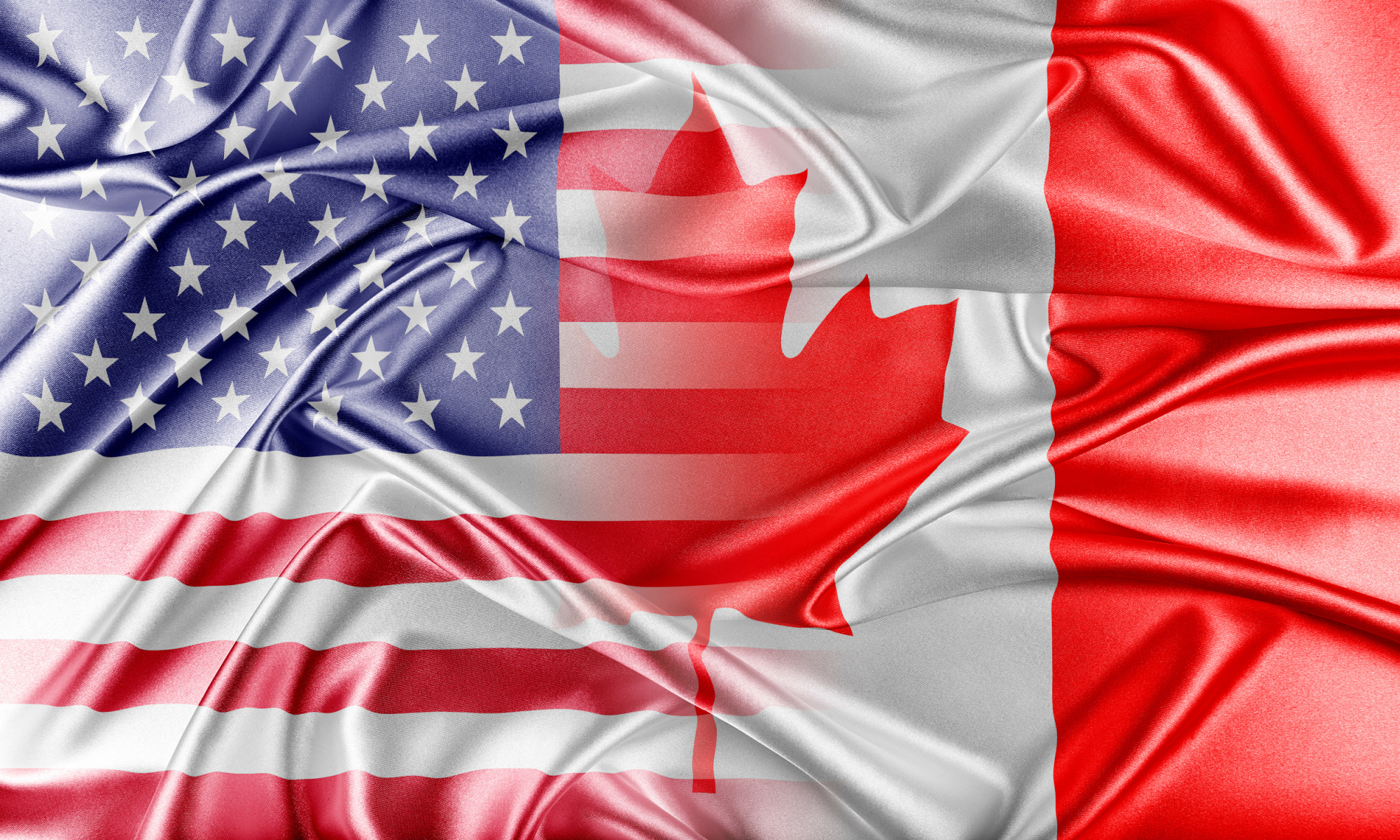
Just when you think the idea has faded away, somebody in the Trump administration (often, the President, himself) again raises the notion of Canada becoming America’s 51st state. Canadians hate the idea, as to most Democrats. But let’s play a game of “What If.”
If you do the math (not even math, just simple addition), it’s easy to extrapolate that Canada would immediately become the second largest U.S. state – and wield the political power that comes with its 38 million people.
Assuming the House of Representatives stays at 435 members (which it has mostly been since 1912), Canada would command 52 seats, at the expense of nearly every other state.
Here’s a cursory look at the numbers:
- The 2023 U.S. population was about 332 million.
- Adding Canada’s 38 million would bring the total to roughly 370 million.
- With 435 seats to distribute, each seat would represent about 850,575 people (370 million / 435).
- Dividing Canada’s population by this number (38 million / 850,575) yields approximately 44.7 seats.
However, the actual apportionment process is more complex, using the “Method of Equal Proportions.” That method guarantees each state (51 states in this scenario) at least one seat, then uses a specific priority formula to dole out the remaining 384. Accounting for all those intricacies, Canada’s seat count would likely be 52.
It would not be a solid block. The Canadian political universe consists of FIVE viable parties, all of which hold seats in the House of Commons: Conservative, Liberal, New Democratic, Green and Block Québécois. The U.S. House would suddenly have more isles than a 747.
And Canada’s new-found power south of the 49th parallel would reach far beyond Washington. It could create a fundamental shift in the philosophies of both major U.S. parties.
Many Canadian politicians, particularly from the Liberal Party and New Democratic Party, would likely align more closely with the Democratic Party in the U.S., potentially strengthening the center-left bloc in Congress.
Canadian Conservatives, while right-of-center, are generally less far-right on social issues compared to their U.S. counterparts. This could introduce a more moderate conservative faction within the Republican Party.
And it’s likely that Canadian lawmakers would push for social policies closer to their former country: stronger social welfare programs, expanded healthcare, making the environment and climate change higher priorities, new gun control laws, and (maybe sit down for this one) promoting greater multiculturalism and immigration.
The Trump administration has taken hits for trying to implement executive orders before considering all the consequences. Trying to make Canada the 51st state would eclipse all other hasty White House moves. It would set the table for the nullification of nearly the entire Trump agenda.
But I’ll end with a reality check. The State of Canada is not going to happen. History and Article IV of the U.S. Constitution lay out five steps for adding a state, the first one being a desire by a majority of the people in a region wanting to join the U.S.
A poll by Abacus Data showed that 71% are “absolutely” against joining the U.S. An Ipsos poll put those opposed at 80%. An Angus Reid poll showed 90% opposed. All three surveys were conducted in January.
And that’s just for humans. Lobsters are already voting with their feet. Or, uh, claws. They’re leaving U.S. waters and moving north to the colder waters and nutrient-rich conditions off the northeast coast of Canada. Maine’s lobster harvest last year was the lowest in 15 years.
Talk about an uncontrolled border!
RECENT

A Simple Way to Reduce Stress This Week
Health & Wellness

Veterans Front and Center at Houston Rodeo
In Service

Leaders Survey Indiana Damage
In The States

Arizona Targets Youth Nicotine Sales
Health & Wellness

Corned Beef and Submarines? The Other March 17 Holidays
Holidays

Lee Newton Debuts Acoustic “Your Hat”
Entertainment

Kentucky Mourns Air Force Tech. Sgt. Ashley B. Pruitt
In The States

Bail Reform Proposal Advances in Indiana Legislature
In The States

JFK and the Rise of Irish America
Legends of the American Spirit

Kentucky Senate Leader Pushes Back on Veto
Education
BE THE FIRST TO KNOW
Want to stay in the loop? Be the first to know! Sign up for our newsletter and get the latest stories, updates, and insider news delivered straight to your inbox.