Mar 16
Animals
New Study Explains Why Cats Almost Always Land on Their Feet
Adobe Stock/yordanka
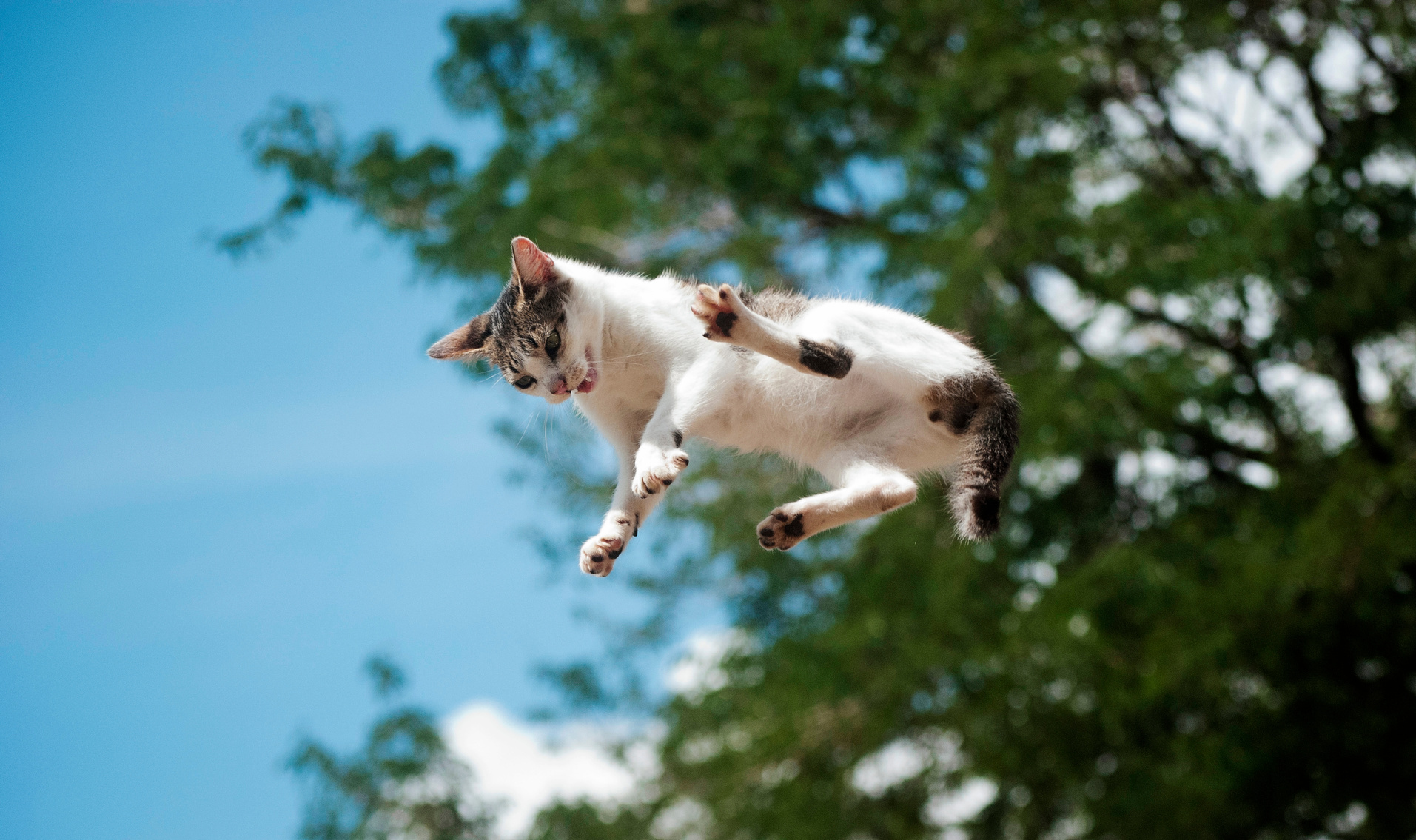
Now, new research helps explain how cats manage this remarkable maneuver.
A study from Yamaguchi University examined the structure of feline spines and found that cats’ ability to land on their feet is closely linked to the flexibility of a specific part of their back.
The findings were recently published in the scientific journal The Anatomical Record.
A Flexible Spine Makes the Difference
Researchers discovered that the thoracic region of a cat’s spine — the middle portion of the back near the rib cage — is significantly more flexible than the lumbar region in the lower back.
This flexibility allows cats to twist their bodies midair during a fall.
By rotating the front and back halves of their bodies independently, cats can quickly reposition themselves to face downward before reaching the ground.
The Science Behind the “Righting Reflex”
Cats rely on what scientists call the “righting reflex,” an instinctive ability that allows them to orient themselves while falling.
When a cat senses a fall, it begins by rotating its head to face downward. The rest of the body follows, twisting through the flexible spine while the legs extend to prepare for impact.
The process happens incredibly quickly — usually within a fraction of a second.
Nature’s Built-In Acrobat
Cats’ flexible spines, light bodies, and quick reflexes all contribute to their impressive aerial skills.
The latest research highlights how the specific mechanical properties of the feline spine play a critical role in this ability.
While cats can often land safely, veterinarians still warn that falls from certain heights can be dangerous, particularly indoors where landing surfaces may be hard.
A Long-Studied Animal Talent
Scientists have been fascinated by cats’ midair acrobatics for decades.
This new study adds another piece to the puzzle, showing how the unique flexibility of the thoracic spine helps cats twist their bodies in ways most animals cannot.
For cat owners, it may simply confirm what they’ve always suspected: cats are natural-born acrobats.
RECENT

Leaders Survey Indiana Damage
In The States

Arizona Targets Youth Nicotine Sales
Health & Wellness

Corned Beef and Submarines? The Other March 17 Holidays
Holidays

Lee Newton Debuts Acoustic “Your Hat”
Entertainment

Kentucky Mourns Air Force Tech. Sgt. Ashley B. Pruitt
In The States

Bail Reform Proposal Advances in Indiana Legislature
In The States

JFK and the Rise of Irish America
Legends of the American Spirit

Kentucky Senate Leader Pushes Back on Veto
Education
The History of St. Patrick’s Day Begins with One Man
Did You Know?

Green Rivers and Weekend Celebrations ☘️
Dating
BE THE FIRST TO KNOW
Want to stay in the loop? Be the first to know! Sign up for our newsletter and get the latest stories, updates, and insider news delivered straight to your inbox.

More Content By
Think American News StaffLeaders Survey Indiana Damage
In The States
Arizona Targets Youth Nicotine Sales
Health & Wellness
Lee Newton Debuts Acoustic “Your Hat”
Entertainment
Kentucky Mourns Air Force Tech. Sgt. Ashley B. Pruitt
In The States
Bail Reform Proposal Advances in Indiana Legislature
In The States
JFK and the Rise of Irish America
Legends of the American Spirit
Kentucky Senate Leader Pushes Back on Veto
Education
The History of St. Patrick’s Day Begins with One Man
Did You Know?
Green Rivers and Weekend Celebrations ☘️
Dating

NC Leaders Form Education Commission
Education
View All Content By Think American News Staff