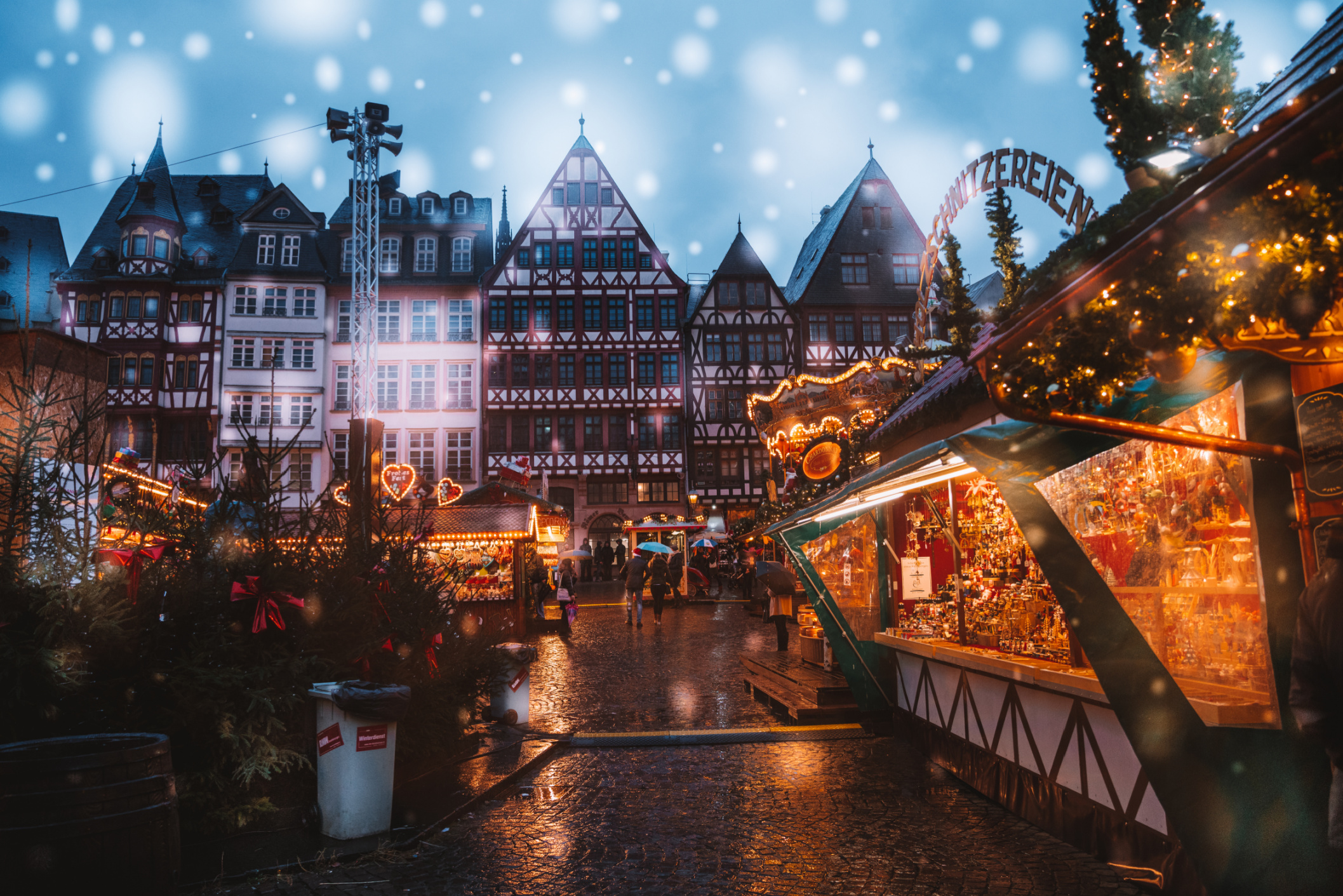
Adobe Stock/Aerial Film Studio/stock.adobe.com
What It’s Really Like to Visit a German Christmas Market
A Cozy Journey Through Germany’s Most Charming Holiday Traditions
A Country That Transforms Into Christmas
Every corner of Germany turns festive by late November, when wooden stalls glow with twinkling lights and the smell of roasting chestnuts, sizzling sausages, and steaming mugs of glühwein fills the air. These centuries-old Christmas Markets—Weihnachtsmärkte—vary by region and vibe, yet share the same warm essentials: handcrafted gifts, local treats, cheerful crowds, and the beloved pfand, a small deposit on mugs that makes the perfect souvenir if you choose to take it home.
Traveling Market to Market
Major cities offer their own unique spin. In Cologne, gnome-themed mugs and an ice rink circling a historic monument set the tone. Frankfurt blends medieval charm with Christmas cookies like Bethmännchen. Mainz turns its gathering spaces into glowing hubs for socializing around bonfires, while Wiesbaden leans elegant with concerts, children’s baking classes, and even meditation.
Smaller towns shine too. Rüdesheim brings global flair, open-late shops, and the iconic brandy-lit Rüdesheim Coffee. Munich mixes medieval markets with choir performances from the Town Hall balcony. Nuremberg offers a wonderland for kids, complete with trains, rides, and rows of tiny sausages. And in Michelstadt, half-timbered houses and mechanical wooden figurines create the most authentic “storybook Germany” backdrop of them all.
Know Before You Go
Most markets are free to enter, though food, drinks, and crafts add up. Bring cash, check dates carefully, and avoid Totensonntag closures—some towns do shut down for the day. Weekdays bring lighter crowds, but part of the charm is brushing shoulders with neighbors wrapped in puffy coats, sipping something warm, and soaking in the spirit of the season.
RECENT

Smullen Pushes Plan to Cure Rural Care Gaps
Health & Wellness

Forecast Flags $5.4 Billion Deficit as Minnesota Falls Behind
Economy

Public Pensions and Crypto: Indiana Weighs ETF Expansion
Crypto

Americans for Prosperity-NC Sets the Stage for 2026 With Key Endorsements
In The States
St. Nicholas, the First Santa
Legends of the American Spirit

SNAP Standoff Could Hit Arizona Families
Food

The Forgotten First White House Christmas Tree
Did You Know?

Burns to Class of 2025: Community Is Georgia’s Greatest Strength
Good News

Merry Weekend Moments
Dating
Kentucky Senate Leaders Set Course for 2026
In The States
BE THE FIRST TO KNOW
Want to stay in the loop? Be the first to know! Sign up for our newsletter and get the latest stories, updates, and insider news delivered straight to your inbox.

More Content By
Think American News StaffSmullen Pushes Plan to Cure Rural Care Gaps
Health & Wellness
Forecast Flags $5.4 Billion Deficit as Minnesota Falls Behind
Economy
Public Pensions and Crypto: Indiana Weighs ETF Expansion
Crypto
Americans for Prosperity-NC Sets the Stage for 2026 With Key Endorsements
In The States
St. Nicholas, the First Santa
Legends of the American Spirit
SNAP Standoff Could Hit Arizona Families
Food
The Forgotten First White House Christmas Tree
Did You Know?
Burns to Class of 2025: Community Is Georgia’s Greatest Strength
Good News
Merry Weekend Moments
Dating
Kentucky Senate Leaders Set Course for 2026
In The States
View All Content By Think American News Staff