Adobe Stock/Prostock-studio
Why Dogs and Food Go Hand in Hand
Let’s face it, dogs love food. From the most delicious steak to that random piece of who knows what lying on the sidewalk. Where there’s food, there’s a dog trying its best to investigate, and possibly devour, the ‘delicious’ morsel. Due to this food love affair, it only makes sense that food is one of the primary resources we use to teach dogs things. But, when can we stop using the food? Or, do you need a treat bag attached to your hip at all times to ensure that your pup will always be able to listen to you?
Why Food Works as a Training Tool
So why does food help us teach dogs things? Food is a great connector tool. A dog’s greatest sense is their sense of smell. When a dog can smell that we have something that they want to consume, they will automatically start behaving in a way that will get them the food. Once we give them the food, we have then marked that activity as something that gets them what they want. Because dogs are always out to benefit their situation, they will continue to practice said behavior in the hopes that it will yield the same results as before. This is why what we’re asking, and how we are asking it, is critical in the communication process. For example, if your dog sits by your side submissively at the table while you eat, and you feed them from the table, you are training your dog to beg at the table. Food is a paycheck, and you essentially paid them every time they sat down next to you and watched adoringly as you consumed your meal.
When Food Becomes the Only Motivator
From a training perspective, food is a great introductory tool. Puppies, dogs that don’t know you very well, one thing every dog can usually agree on is, food is great and I need food! Food can promote focus and build a relationship. Once you have achieved the focus and built the trust, the next step to achieve is to move away from the food being the only motivator. This is where many people struggle. If food has been used incorrectly during the initial training process, the dog will have a hard time seeing the human as the motivator and therefore, weaning off the food becomes a herculean task. The following steps break down my treat to no treat approach when dog training.
Step 1: Introduce the Gesture First
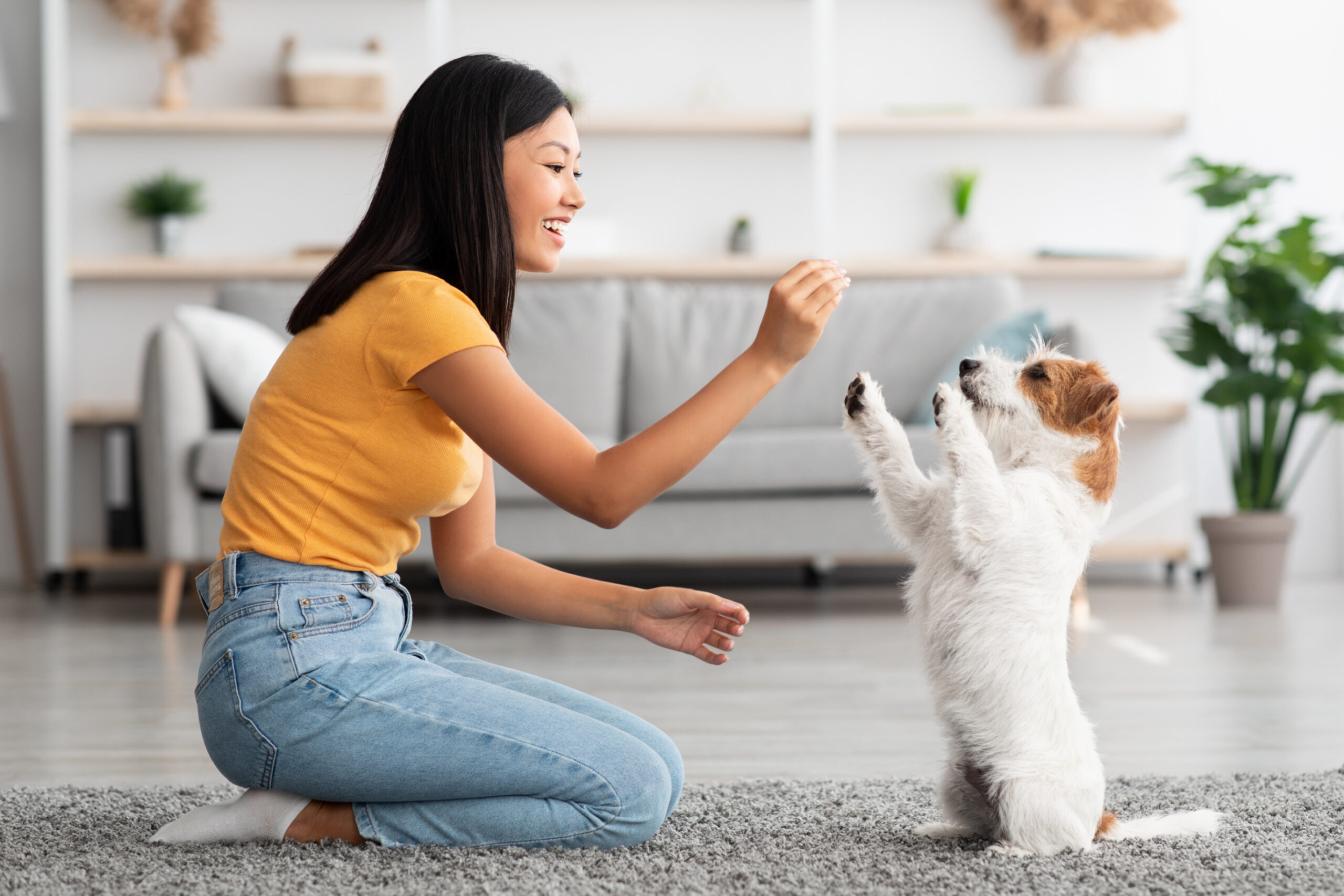
Choose a command. Let’s say it’s Sit. Now, you will also need to pick a hand gesture. Remember, dogs are gesture based first, verbal second. With a treat in your hand, get your dog’s focus, and perform your gesture ONLY ( no words). Once they sit, which they will, give them the food immediately. The reason they will sit is because, the smell of the food has their focus, they are focused on your hand, your hand is moving in such a way that makes their mind and body follow it until their back end hits the ground…aka sit. The immediate treat marks the moment. Practice this over and over again until your dog understands the gesture seamlessly.
Step 2: Add the Verbal Command
Add the word. Practice the same steps in step 1, only now you are adding the word with the hand gesture and the treat. Your tone should be one of telling (kindly) not asking. Practice using the word and gesture together until your dog is performing it with ease, in low distraction.
Step 3: Proof the Command in New Environments
Generalize the command in different places. Now your dog begins to understand that they don’t just Sit in the living room. This is called proofing and is imperative when teaching your dog anything. If you really want to know if your dog knows something, practice the exercise in a different location. Continue to use the treats with every repetition until your dog becomes comfortable working in a few new places other than home.
Step 4: Weaning Off the Treats
Begin to wean off the treats. Starting at home, ask your dog to SIt and then, give verbal and physical praise, but no treat. Then repeat the exercise, but this time the reward is the treat. Practice this method both in the home and outside while on a walk. Not knowing when they’re going to get the ultimate prize builds patience, duration, and a dog that is now beginning to work for….YOU!
Building a Relationship Beyond Food
How much you wean off the use of food is up to you. My goal for any owner is for them to realize that they don’t need to depend on food to get a job done. The food helps but ultimately, we need to make sure that our dog has a relationship with us and is not just using us to get what they want!
RECENT

Creating a Cozy Home That Supports Your Well-Being
Health & Wellness

Creating a Cozy Home That Supports Your Well-Being
Health & Wellness
5 Easy Ways to Prepare for the Next Season Before It Takes Over
Health & Wellness

Your 40s Aren’t Just About Hormones — They’re About Your Heart
Uncategorized
Wellness Benefits of Pumpkin Season
Health & Wellness
Fall Into Wellness: Creating a Healthier Autumn Routine
Health & Wellness

How to Prepare for Holiday Stress Before It Takes Over
Fitness
🇺🇸 Why the Liberty Bell Doesn’t Actually Ring Anymore
Did You Know?

A Rock Star’s Road to Redemption
Entertainment
New York Community Replaces Defaced Declaration Replica
America
BE THE FIRST TO KNOW
Want to stay in the loop? Be the first to know! Sign up for our newsletter and get the latest stories, updates, and insider news delivered straight to your inbox.
More Content By
Kate McCue
Passing the Torch to New Dog Owners
Mans Best Friend
The Dog-Walking Mistake Owners Often Miss
Animals
Being a Dog Person Doesn’t Mean You Understand Dogs
Mans Best Friend
Recall Problems Start at Home—Not in the Yard
Animals
Before You Buy a Dog, Read This First
Mans Best Friend
A Dog’s Last Lesson
Animals
Why Boundaries ARE Love
Mans Best Friend
When Love Means Letting Go
Animals
Healing Trauma in Rescue Dogs Starts with Rebuilding Trust
Animals
Why Your Dog’s Diet Matters More Than You Think
Uncategorized
View All Content By Kate McCue